


News & Events
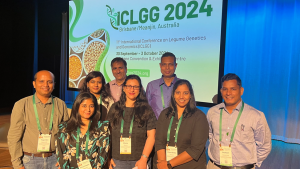
The ICLGG conference series is dedicated to advancing global strategies for legume improvement that prioritize environmental sustainability. The International Crops Research Institute for the Semi-Arid Tropics (ICRISAT) organized the 6th ICLGG in 2012 and the 10th ICLGG in 2022, and continues to play a pivotal role in this initiative. At this year's event, ICRISAT scientists were key contributors, presenting pioneering research such as machine-harvestable, disease-resistant chickpeas, the world’s first pigeonpea hybrids, and high oleic acid peanuts.
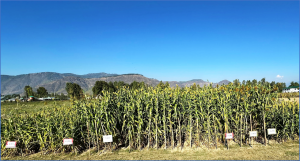
The release follows advanced on-farm trials of elite sorghum lines conducted by the International Crops Research Institute for the Semi-Arid Tropics (ICRISAT) in collaboration with the Sher-e-Kashmir University of Agricultural Sciences and Technology (SKUAST), Kashmir. The partnership focused on promoting dual-purpose sorghum varieties that provide both grain and forage. These varieties aim to enhance food, feed, and fodder security, addressing the critical feed supply-demand gap in the region’s animal husbandry sector,
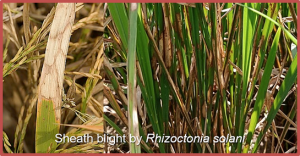
Rhizoctonia solani Kühn is a pathogen causing rice sheath blight (ShB). Ammonium transporter 1 (AMT1) promotes resistance of rice to ShB by activating ethylene signaling. However, how AMT1 activates ethylene signaling remains unclear. In this study, the indeterminate domain 10 (IDD10)-NAC079 interaction model was used to investigate whether ethylene signaling is modulated downstream of ammonium signaling and modulates ammonium-mediated ShB resistance. RT-qPCR assay was used to identify the relative expression levels of nitrogen and ethylene related genes.
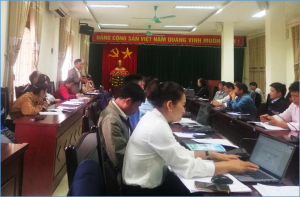
Since 2023, the Chăn-hênh (SAPLING) initiative by CGIAR has been fostering sustainable livestock practices in eight farmer groups in the Mai Son District of Son La Province, Vietnam.The project has provided technical support to participants to adopt advanced practices in breeding selection, animal health management, and feed and forage management.
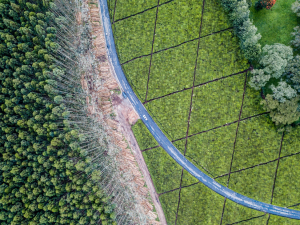
Over the past three years, the CGIAR Research Initiative on Foresight has been working with partners to strengthen their capacity to understand and use foresight metrics and tools, and to use foresight results to shape decision-making. This includes jointly identifying key foresight training needs; developing ways to scale the use of integrated foresight tools, data, and analysis; building capacity in these tools and methods; and monitoring key outcomes and impacts to support learning and allow for course adjustments.
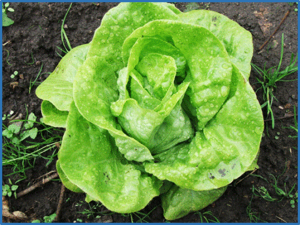
Lettuce (Lactuca sativa L.) is a source of beneficial compounds though they are generally present in low quantities. We used 40K Axiom and 9K Infinium SNP (single nucleotide polymorphism) arrays to (i) explore the genetic variability in 21 varieties and (ii) carry out genome-wide association studies (GWAS) of vitamin C content in21 varieties and a population of 205 plants from the richest variety in vitamin C (‘Lechuga del Pirineo’).
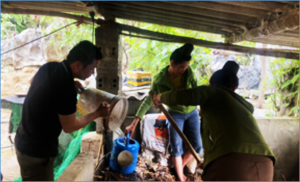
Since 2023, the CGIAR Initiative on Sustainable Animal Productivity (SAPLING) has been assisting eight livestock farmer groups in Son La Province, Vietnam, as part of enhancing the local livestock industry. This assistance encompasses facilitating access to input and output markets, offering a platform for skill development, and collaboratively developing solutions for challenges related to pig and cattle farming.
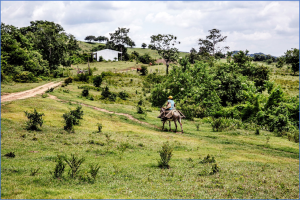
Closing the gap between ambition and implementation is the next frontier in the struggle to conserve the vast array of plant and animal species comprising life on earth and the habitats they rely on, including our own. Currently, one out of every 11 people in the world is experiencing hunger, and projections show that 585 million people will be chronically undernourished by 2030. Without biodiversity, we risk our capacity to feed the world sustainably.
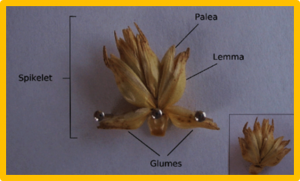
Spikelet number per spike (SNS) is an important yield component in wheat that determines the maximum number of grains that can be formed in a wheat spike. In wheat, loss-of-function mutations in LEAFY (LFY) or its interacting protein WHEAT ORTHOLOG OF APO1 (WAPO1) significantly reduce SNS by reducing the rate of formation of spikelet meristems. In previous studies, we identified a natural amino acid change in WAPO1 (C47F) that significantly increases SNS in hexaploid wheat.
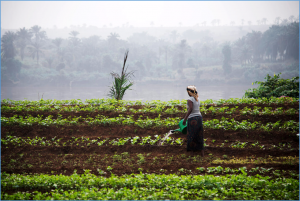
About a quarter of the population in the Democratic Republic of the Congo (DRC) continues to face acute hunger, according to the latest Integrated Food Security Phase Classification (IPC) analysis released today. The new data shows that between July and December 2024, approximately 25.6 million people in the DRC, or 22 percent of the population analysed, are experiencing high acute food insecurity (IPC Phase 3 or above). This includes around 3.1 million people facing critical levels of food insecurity (IPC Phase 4).
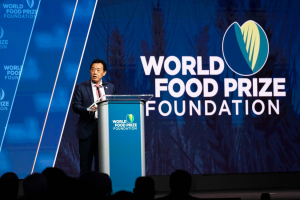
Breakthroughs in genetic science have brought the world to “the dawn of a new era” and can propel solutions to a spectrum of inter-related global challenges including assuring food security, tackling the climate crisis and protecting biodiversity, QU Dongyu, Director-General of the Food and Agriculture Organization of the United Nations (FAOI), said today at the Borlaug International Dialogue of the World Food Prize 2024 opening ceremony.
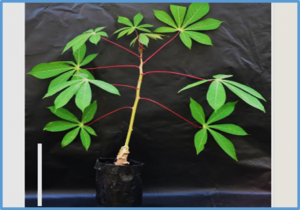
Grafting techniques have been successfully adopted to improve resistance to biotic and abiotic stresses, increase yields, fruit quality and study systemic signaling in plants. This technique has not been fully explored in cassava and there is currently no standardized grafting method for this species published especially in Africa. This is the first report on cassava grafting protocol in Africa with valuable advantages including utilizing a cost-effective and environmentally friendly wooden healing chamber.