


News & Events
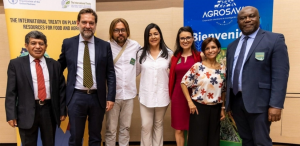
On October 22, 2024, a special event was held at the Sixteenth meeting of the Conference of the Parties to the United Nations Convention of Biological Diversity (CBD COP16) in Cali to celebrate Colombia's ratification of the International Treaty on Plant Genetic Resources for Food and Agriculture. The Republic of Colombia has deposited its instrument of ratification of the International Treaty on Plant Genetic Resources for Food and Agriculture with the Director-General of the Food and Agriculture Organization of the United Nations, and will become the 153rd Contracting Party.

The sixteenth meeting of the Conference of the Parties (COP16) to the Convention on Biological Diversity (CBD) gathered 204 delegates from 130 country Parties in Cali, Colombia, from October 21 to November 1, 2024. COP16 aims to continue the discussions of COP15 which highlighted the implementation of the Kunming-Montreal Global Biodiversity Framework.

At the northern high latitudes, rapid warming, associated changes in the hydrological cycle, and rising atmospheric CO2 concentrations, [CO2], are observed at present. Under rapid environmental changes, it is important to understand the current and future trajectories of the CO2 budget in high-latitude ecosystems.
On October 2, 2024, the U.S. Department of Agriculture (USDA), the U.S. Environmental Protection Agency (EPA), and the U.S. Food and Drug Administration (FDA) launched the Unified Website for Biotechnology Regulation, a new web-based tool for companies developing microbial biotechnology products. The unified website provides information on regulatory requirements and approval processes for biotechnology products with genetically modified (GM) microorganisms.
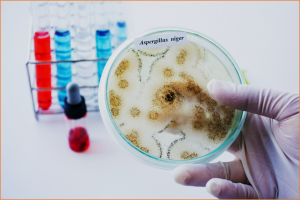
The European Food Safety Authority (EFSA) GMO Panel evaluated the safety of the food enzyme carboxypeptidase C produced from the genetically modified (GM) Aspergillus niger strain PEG by DSM Food Specialties B. V. The genotoxicity and systemic toxicity tests showed no safety concerns and adverse effects level of 1850 mg TOS/kg bw per day, the highest dose tested, compared to the estimated dietary exposure.
Agriculture under an erratic climate requires tapping into a reservoir of flexible adaptive loci that can lead to lasting yield stability under multiple abiotic stress conditions. Domesticated in the hot and dry regions of Africa, sorghum is considered a harsh crop, which is adapted to important stress factors closely related to climate change. To investigate the genetic basis of drought stress adaptation in sorghum,
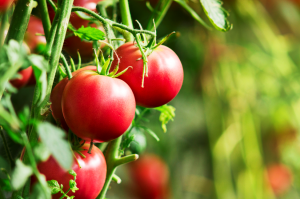
In a study conducted at the Max Planck Institute for Plant Breeding Research in Cologne, Germany, scientists established a system to generate clonal sex cells in tomato plants and used them to design the genomes of offspring. The fertilization of a clonal egg from one parent by a clonal sperm from another parent produced plants containing the complete genetic information of both parents.
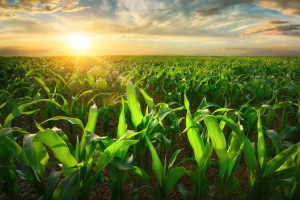
A survey conducted by agricultural economists with the University of Arkansas System Division of Agriculture shows that a fully implemented ban on genetically modified (GM) corn in Mexico could burden lower-income consumers in the country. The study is published in Food Security. Mexico, the second-largest importer of US corn, heavily relies on maize imports for livestock production. With 90% of US corn being GM, American farmers would be greatly affected by the presidential decree
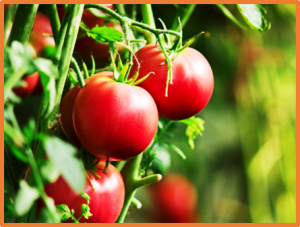
Hybrid seeds, combining two different parent lines with specific favorable traits, are popular in agriculture as they give rise to robust crops with enhanced productivity, and have been utilized by farmers for over a hundred years. The increased performance of hybrids is generally known as hybrid vigour, or heterosis, and has been observed in many different plant (and animal) species. However, the heterosis effect no longer persists in the subsequent generations of these hybrids due to the segregation of genetic information
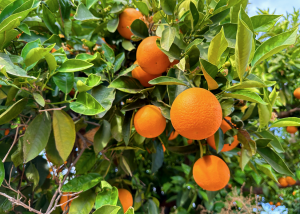
The USDA Animal and Plant Health Inspection Service released a response to the regulatory status review for sweet orange modified to impart resistance to citrus greening through reduced production of two host targets of Candidatus Liberibacter asiaticus effector proteins. The response letter signed by Bernadette Juarez, APHIS Deputy Administrator for Biotechnology Regulatory Services indicated that “APHIS has determined the sweet orange is unlikely to pose an increased plant pest risk relative to its comparators.
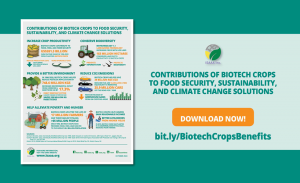
ISAAA Inc. releases a new infographic featuring the contributions of biotech crops to food security, sustainability, and climate change solutions. Biotech crops are adopted globally because of their enormous benefits to the environment, human and animal health, and contributions to improving the socio-economic conditions of farmers and the general public.
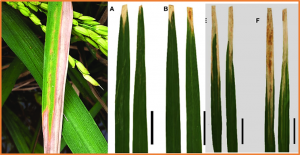
Rice is one of the most important food crops in the world, and its yield restricts global food security. However, various diseases and pests of rice pose a great threat to food security. Among them, bacterial leaf blight (BLB) caused by Xanthomonas oryzae pv. oryzae (Xoo) is one of the most serious bacterial diseases affecting rice globally, creating an increasingly urgent need for research in breeding resistant varieties. Phytohormones are widely involved in disease resistance, such as auxin, abscisic acid (ABA), ethylene (ET), jasmonic acid (JA), and salicylic acid (SA). In recent years, breakthroughs have been made in the analysis of their regulatory mechanism in BLB resistance in rice.