


News & Events
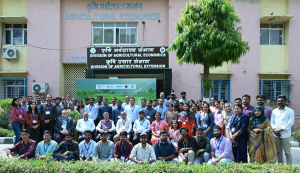
The International Food Policy Research Institute (IFPRI) and the CGIAR Initiatives on Foresight and National Policies and Strategies, in partnership with the South Asian Network on Economic Modeling (SANEM), the Indian Council of Agricultural Research-Indian Agricultural Research Institute (ICAR-IARI), and ICAR-National Institute of Agricultural Economics and Policy Research (ICAR-NIAP),
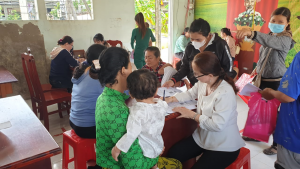
A partnership between the CGIAR Research Initiatives on Asian Mega-Deltas (AMD) and the Vietnam Ministry of Health, organized by CIAT on behalf of the Alliance of Bioversity International and CIAT, will explore the linkages between human mobility (displacement, migration, planned relocation, immobility) and food and nutrition security (FNS) outcomes in Vietnam’s Mekong Delta.
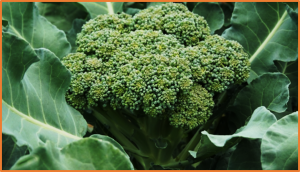
Self-incompatibility (SI) is a common phenomenon in Brassica oleracea species, which can maintain genetic diversity but will also limit seed production. Although the S locus has been extensively studied in Arabidopsis and some Brassicaceae crops, map-based cloning of self-incompatibility genes has not been conducted in Brassica oleracea, such as cauliflower and broccoli.

COP29 will take place at The Baku Stadium located in the Capital City of Azerbaijan in November 2024. Having been involved in COP events since 2017, orientations.events are delighted to have been appointed as the Official Contractor for ‘Delegation Services’ at this year’s event. We are responsible for the Delegation Offices and Pavilions and all the related services required.
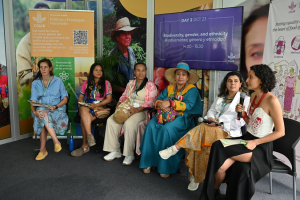
On October 23, the gender team of the Alliance of Bioversity-CIAT, Natura Foundation, and the Directorate of Rural Women of the Ministry of Agriculture held the panel Biodiversity, Gender, and Ethnicity, in the framework of the COP16, CGIAR pavilion, a space for interdisciplinary and interethnic dialogue designed to discuss the challenges and opportunities in biodiversity conservation with a gender and ethnicity perspective.
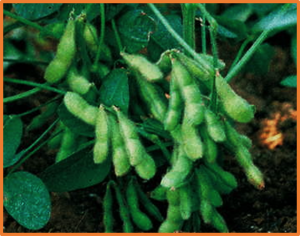
The precise control of flowering time is of utmost importance for crop adaptation to varying environmental conditions and consequently determines grain yield and plant fitness. Soybean E2, the homolog of Arabidopsis GIGANTEA, is a major locus contributing to high-latitude adaptation and is involved in photoperiod sensitivity. However, due to major effects of E2, additional genetic loci controlling soybean flowering and adaptation have historically been masked and difficult to identify.
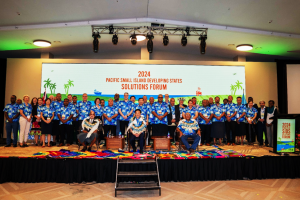
Organized by the Food and Agriculture Organization of the United Nations (FAO) and the Government of Fiji, the SIDS (Small Island Developing States) Solutions Forum 2024, from 5 to 8 November, is a high level platform, aimed at sharing innovative solutions and showcasing their impacts and scalability to transform how food is produced, distributed and consumed in the Pacific Islands region.
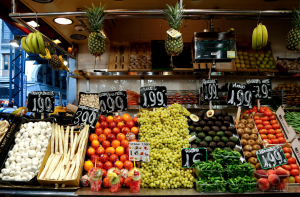
A refined study by the Food and Agriculture Organization of the United Nations (FAO) involving 156 countries confirms that hidden costs within global agrifood systems amount to approximately $12 trillion annually. Of this figure, around 70 percent ($8.1 trillion) arise from unhealthy dietary patterns and are linked to alarming non-communicable diseases (NCDs) such as heart disease, stroke, and diabetes, far exceeding the costs related to environmental degradation and social inequalities
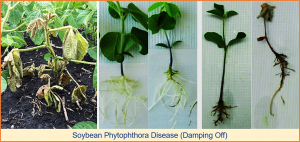
Phytophthora root and stem rot (PRR) caused by Phytophthora sojae is a severe disease that causes substantial economic losses in soybean [Glycine max (L.) Merr.]. The primary approach for successful disease management of PRR is using R-gene-mediated resistance. Based on the phenotypic evaluation of 376 cultivated soybean accessions for the R-gene type resistance to P. sojae (isolate 2457), a genome-wide association analysis identified two regions on chromosomes 3 and 8.
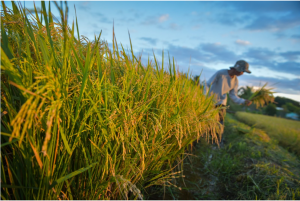
The Philippine Rice Research Institute (PhilRice) announced the submission of a Petition for Review on Certiorari with a request for a Temporary Restraining Order and Preliminary Injunction before the Supreme Court, in line with the Court of Appeals' decision in the Writ of Kalikasan case filed against Golden Rice, also known as Malusog Rice.
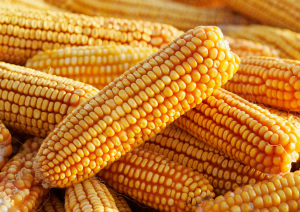
The U.S. Department of Agriculture's (USDA) Animal and Plant Health Inspection Service (APHIS) has released their review of three plants modified using genetic engineering to determine whether they posed an increased plant pest risk as relative to non-modified comparators. APHIS found that these modified plants were unlikely to pose an increased plant pest risk compared to other cultivated plants and were not subject to regulation under 7 CFR part 340 and may be safely grown and bred in the United States.
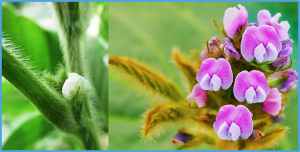
Soybean, as a legume, is typified by trifoliolate leaves. Although multifoliolate leaves (compound leaves with more than three leaflets each) have been reported in soybean, including sporadic appearances in the first compound leaves in a recombinant inbred line (RIL) population from a cross between cultivated soybean C08 and wild soybean W05 from this study, the genetic basis of this phenomenon is still unclear.