


News & Events

We are eager to hear your thoughts on our e-newsletter, Biotech Updates. Your feedback is invaluable to us as we strive to enhance our services. Please take a moment to complete this short questionnaire. All of the information you provide will be treated as confidential and will only be used to improve our newsletter.
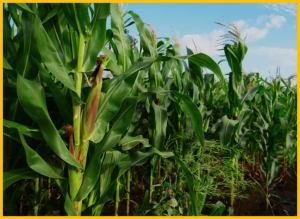
Maize (Zea mays L.) production in Argentina changed markedly during the last decade due to the widespread adoption of late sowing dates, expanding its productive area, and diversifying crop end-uses. This study was conducted to assess how the sowing date and nitrogen (N) availability affect grain yield, its physiological determinants (biomass and its partitioning), and numeric components (kernel number and kernel weight) of maize hybrids marketed for different end-uses
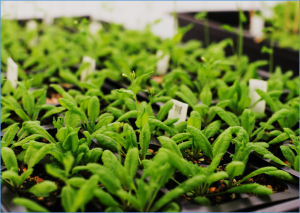
Researchers from Wageningen University & Research (WUR) and Michigan State University have uncovered genetic variation in the unexplored DNA of the photosynthetic and energy factories of Arabidopsis plants. Such variation plays a crucial role in photosynthetic efficiency in plants and could pave the way for more productive, climate-resilient crops.
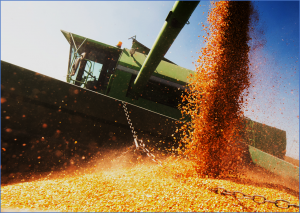
A comprehensive study conducted by the World Bank and the University of Idaho reveals that crop yields have continued to grow at roughly the same rate since the 1960s, contrary to the belief that it has stagnated in recent years. In the study, published in the open-access journal PLOS ONE, the researchers developed standardized measures to determine the production and yield of 144 crops, covering 98 percent of global agricultural land.
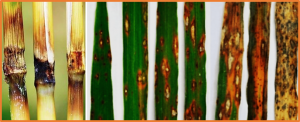
In the ongoing arms race between rice and Magnaporthe oryzae, the pathogen employs effectors to evade the immune response, while the host develops resistance genes to recognise these effectors and confer resistance. In this study, we identified a novel Pik allele, Pik-W25, from wild rice WR25 through bulked-segregant analysis, creating the Pik-W25 NIL (Near-isogenic Lines) named G9. Pik-W25 conferred resistance to isolates expressing AvrPik-C/D/E alleles. CRISPR-Cas9 editing was used to generate transgenic lines with a loss of function in Pik-W25-1 and Pik-W25-2, resulting in loss of resistance in G9 to isolates expressing the three alleles, confirming that Pik-W25-induced immunity required both Pik-W25-1 and Pik-W25-2.

As we reach our 80th Anniversary, we should celebrate our institutional renewal, building upon the transformation pathway we embarked on together in 2019, to ensure that our Organization is more fit for purpose for the next 20 years, and beyond, In line with the ever-evolving global development agenda, and to ensure that our children and our grandchildren will reap the benefits of the seeds we plant today. Our shared vision is to strengthen the Four Betters – better production, better nutrition, a better environment and a better life, for a shared prosperity leaving no one behind.

The hybrids are specifically developed to excel in Zimbabwe’s semi-arid conditions, offering substantially higher yields compared to the older open-pollinated varieties (OPVs) traditionally used by farmers. In addition to their drought tolerance, these hybrids present opportunities to boost farmer incomes through diverse applications, including food production, animal feed, and industrial uses such as brewing.
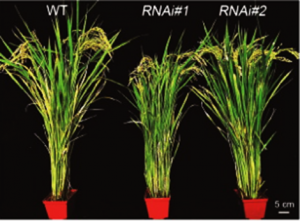
Receptor kinases play a pivotal role in detecting environmental signals, and consequently, gene pleiotropy is frequently observed within this family. However, the trade-off in trait expression resulting from gene pleiotropy poses a constraint on the utilization of such genes in agricultural breeding. In this study, we identified the receptor kinase gene FERONIA-Like Receptor 13 (FLR13) as a pleiotropic gene influencing plant height, tillering, grain yield, and disease resistance. Using promoter editing, we generated novel alleles (FLR13T5T6-1, FLR13T5T6-2) that confer resistance to rice blast and increase per-plant yield.
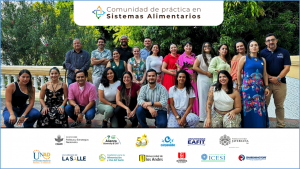
Communities of Practice (CoP) have become an essential pillar for fostering collaboration and knowledge exchange among professionals and experts interested in specific issues. In Colombia, the Food Systems Community of Practice (CoP-SA) represents a collective effort to address the challenges and opportunities facing the country’s food system. Since its creation, the CoP-SA has established itself as a key space for uniting knowledge, innovation, and action around Colombia’s food-related challenges.
Hunan University researchers and partners from China reported that the receptor kinase gene FERONIA-Like Receptor 13 (FLR13) influences plant height, tillering, grain yield, and disease resistance. Their findings are published in The Crop Journal. Receptor kinases are vital in discovering environmental signals. Consequently, gene pleiotropy is usually manifested among receptor kinases, thus posing a constraint on the use of such genes in crop improvement.
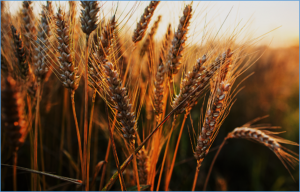
Wheat is a major staple food worldwide yet numerous yield limiting agents affect its productivity. Stripe rust is a major culprit in this context and efforts have been made to culminate this pathogen using conventional as well as advanced innovative techniques. Transgenic technology is of significant importance in this context and numerous success stories are evident to prove its worth.
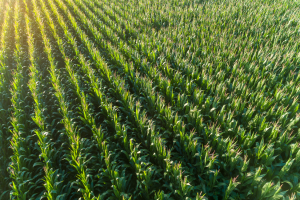
Heat Shock Proteins (HSPs) are like bodyguards for cells, protecting them from stress. One type of HSP, called DnaJ, is present in plants. Scientists from Hebei Agricultural University studied a specific DnaJ protein called ZmDnaJ in maize. The researchers found that ZmDnaJ is activated when plants experience drought stress. By activating ZmDnaJ, plants can better cope with drought by closing the stomata, increasing the abscisic acid levels, and regulating photosynthesis.