


News & Events

A new short film from the CGIAR Initiative on Asian Mega-Deltas and the CGIAR Initiative on Aquatic Foods documents work to support efforts in Cambodia to delegate the management of water, land, agriculture, fisheries and the environment to the district level. WorldFish and the International Water Management Institute (IWMI) – working closely with Cambodia’s Inland Fisheries Research and Development Institute (IFReDI) – piloted the institutional innovation, which supports the implementation of a decision by the Royal Government of Cambodia in 2019.
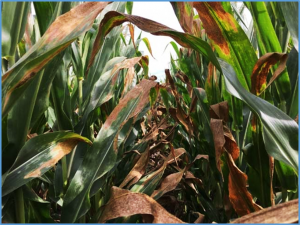
Temperature shapes the geographical distribution and behavior of plants. Understanding the regulatory mechanisms underlying the plant heat stress response is important for developing climate-resilient crops, including maize (Zea mays). To identify transcription factors (TFs) that may contribute to the maize heat stress response, we generated a dataset of short- and long-term transcriptome changes following a heat treatment time course in the inbred line B73

The global gene editing market value is expected to reach USD 17.5 billion by the end of 2031 with a compound annual growth rate of 13.9% from 2023 to 2031. This projection is according to the latest report of Transparency Market Research. The growth in the gene editing market is attributed to the advancements in biotechnology, increasing investments in biotech research, and a boost in applications of gene editing tools in healthcare, agriculture, and industrial sectors.

As climate change poses more challenges to crops, the need for disease-resistant grape cultivars becomes more urgent. In a new study conducted by researchers from Nanjing Forestry University and Northwest A&F University, researchers made significant progress in using CRISPR-Cas9 gene editing technology to bolster grapevine resistance to B. cinerea.
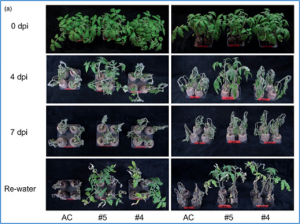
Bacteria within the Ralstonia solanacearum species complex cause devastating diseases in numerous crops, causing important losses in food production and industrial supply. Despite extensive efforts to enhance plant tolerance to disease caused by Ralstonia, efficient and sustainable approaches are still missing. Before, we found that Ralstonia promotes the production of gamma-aminobutyric acid (GABA) in plant cells
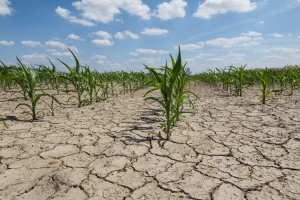
Plant experts from the University of Western Australia (UWA) and the University of Copenhagen provide two viable options for feeding the world in the midst of a worsening climate. The first option is to introduce genes that confer resistance to environmental stress into existing high-yield crops, while the second option is to domesticate wild plants that are resistant to environmental stresses but have lower yields than domesticated crops. They discussed these techniques in their feature article published in Frontiers in Science.

A study published in the Plant Biotechnology Journal shows that reduced content of gamma-aminobutyric acid (GABA) enhances resistance to bacterial wilt disease in tomatoes. This approach reveals a new strategy to enhance plant resistance to Ralstonia solanacearum. The Ralstonia solanacearum species complex is responsible for destructive diseases in a wide range of crops, leading to significant agricultural and economic losses.
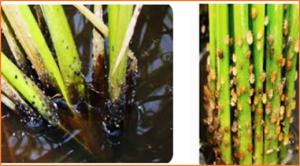
Rice yield is often threatened by various stresses caused by biotic and abiotic agents. Many biotic stress factors are known to cause crop growth and yield from seedling to maturity. The brown plant hopper (BPH) can potentially reduce the rice yield to an extent of up to 80%. Intensive research efforts in 1972 led to a better understanding of pathogens/insect and host-plant resistance.

Researchers from China's Shaanxi Normal University led by Dr. Xianfeng Liu have published a new study highlighting a decline in rice quality in East Asia, particularly China and Japan, brought about by changing temperatures. Dr. Xianfeng Liu and colleagues used data collected over 35 years to explore the patterns in rice quality from Japan and China based on head rice rate (HRR). HRR is a portion of milled rice kernels that retain 75% of their length after milling, during which the husk and bran are removed.
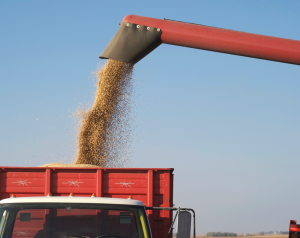
The Government of Japan has approved a total of 334 genetically modified products for food use as of September 2024. This is according to the latest USDA Foreign Agricultural Service report about the status of agricultural biotechnology in Japan. Japan continues to be a major importer of GM food and feed, sourcing mostly from the US. Other major exporters include Canada, Brazil, and Argentina.
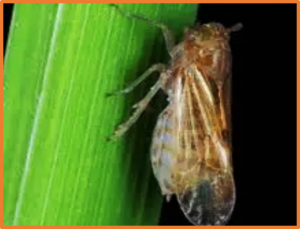
All three pyramiding rice lines maintained the insect resistant ability under the three environmental settings. In particular, the BPH18 + 32 rice line exhibited stronger antibiotic and antixenosis effects against N. lugens. In addition, BPH18 + 32 rice line had better shoot resilience under N. lugens infestation, whereas the performance of the other two selected pyramiding rice lines varied. Thus, although BPH2, BPH9, and BPH18 represent three alleles at the same locus, their resistance levels against N. lugens may vary under distinct climate change scenarios, as evidenced by the performance of N. lugens on the three pyramiding rice lines.

On December 2, 2024, the United States District Court for the Northern District of California, vacated the U.S. Department of Agriculture (USDA) final rule (7 CFR part 340) that was issued in May 2020 for organisms developed using genetic engineering (GE). Since May 2020, at least 99 GE plants have been exempted.