


News & Events

Researchers at the University of Missouri (Mizzou) are on the verge of a breakthrough in fighting soybean cyst nematodes (SCN) as they identified a gene that confers a new mode of resistance to the parasite. Soybean cyst nematodes cost American farmers an estimated US$2 billion in yield losses each year. Since the pest's discovery in 1954, plant scientists have worked to combat its destructive impact.
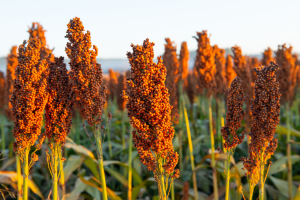
Chinese scientists have identified two specific genes in sorghum, SbSLT1 and SbSLT2, that confer resistance to Striga, a major parasitic plant responsible for major crop losses. When the two genes are knocked out, the plant's resistance to Striga, commonly known as witch-weed, significantly increases. This discovery sheds light on the natural defense mechanisms of sorghum.
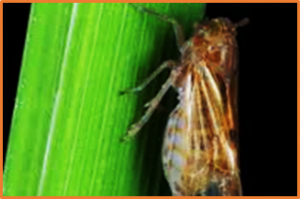
The brown planthopper (BPH) is a significant piercing-sucking pest of rice plants that causes widespread destruction globally. Discovering new germplasms and genes for BPH resistance is essential for enhancing genetic diversity in rice breeding. In this study, 4006 rice accessions from tropical and subtropical regions were screened for BPH resistance at the seedling stage, and 63 accessions with high-resistant were identified. Of these, 59 accessions exhibited high resistance to BPH at the adult stage.

China continues to exhibit support for the commercialization of genetically modified (GM) crops to attain food security targets. This is according to a report published by Modern Diplomacy about China's agricultural priorities for 2025. “China's current Five-Year Agricultural Plan targets annual grain production exceeding 770 million tonnes, alongside a push to increase domestic soybean production to 23 million tons by 2025.
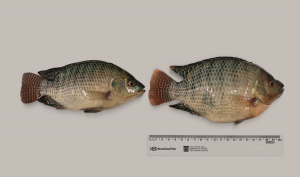
Brazilian Fish, a leading tilapia producer, announces the successful development of gene-edited tilapia in Brazil, in partnership with the Center for Aquaculture Technologies (CAT) in the United States. The initiative aims to improve the productivity and yield of tilapia by accelerating breeding efficiency from 20 years of conventional breeding program to just one year. CAT scientists, in collaboration with Brazilian Fish's R&D team, developed the first reproductive induction and in vitro fertilization tests to create precise genetic variations resulting in improved growth, yield, and feed efficiency.
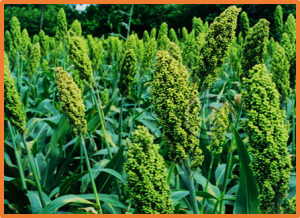
Parasitism with Striga poses a major threat to global food production. Striga germination and growth rely on strigolactones (SLs) exuded by crop roots under phosphate (Pi)-deficient conditions, although the mechanism of this host-parasite interaction remains elusive. In this study, transcriptomic and functional analyses of sorghum treated with Pi deficiency or the SL GR245DS identify two ABC transporter G (ABCG) transporters of SL, Sorghum biocolor strigolactones transporter 1 (SbSLT1) and SbSLT2.
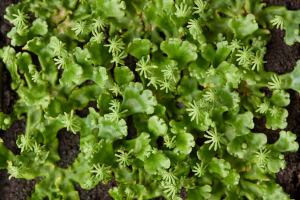
A new study by Liam Dolan and Frédéric Berger at the Gregor Mendel Institute (GMI) of Molecular Plant Biology connects climate data with genetic variation, shedding light on how plants like Marchantia polymorpha adapt to different climate conditions. Understanding how plants naturally adapt to varying environments is essential for predicting their responses to climate change, which can ultimately aid in developing more resilient crops. Dolan and Berger's research utilized population genetics along with global climate data to identify genetic variants that contribute to climate adaptation in M. polymorpha.
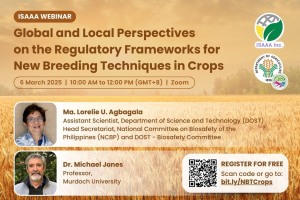
The webinar aims to provide information on the biosafety regulations and policy framework/s governing the use of New Breeding Techniques (NBTs) in improving crops and expound on the challenges and potential policy directions that can support the responsible and sustainable use of these technologies. The webinar also aims to be a venue for stakeholders to engage in meaningful discussions on harmonized regulations facilitating the responsible use of NBTs in agriculture.
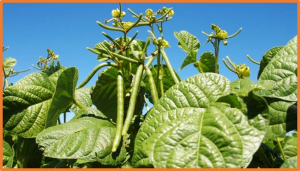
The remarkable evolutionary history of the common bean (Phaseolus vulgaris L.) has led to the emergence of three wild main gene pools corresponding to three different eco-geographical areas: Mesoamerica, the Andes and northern Peru/Ecuador. Recent works proposed novel scenarios, and the northern Peru/Ecuador population has been described as a new species called P. debouckii, rekindling the debate about the origin of P. vulgaris.
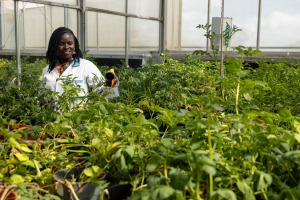
In agricultural science, success isn’t solely determined by technical prowess—it’s also reliant on effective organizational processes and strategies. Through ReOrganize, a Work Package of CGIAR Accelerated Breeding, process management working groups delved into how breeders do things. They didn’t focus on the technical intricacies but on the organization of breeding itself, monitoring of performance of breeding and the empowerment of CGIAR breeders and scientists in their mission to deliver the crop varieties that the world urgently needs.
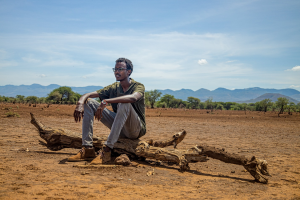
Drylands are the backbone of global agriculture, supporting 44% of the world’s farming. Yet, they are under siege. Climate change, land degradation, and water scarcity are transforming these essential regions into barren landscapes, threatening the livelihoods of nearly three billion people. These lands, which already face some of the harshest conditions on Earth, are warming faster than other parts of the planet. Their decline imperils food security, biodiversity, and stability across vast swaths of the globe.
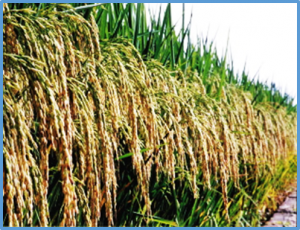
The two-line hybrid rice system, a cutting-edge hybrid rice breeding technology, has greatly boosted global food security. In thermo-sensitive genic male sterile (TGMS) lines, the critical sterility-inducing temperature (CSIT; the temperature at which TGMS lines change from male fertile to complete male sterile) acts as a key threshold. We recently uncovered that thermo-sensitive genic male sterility 5 (tms5), a sterile locus presenting in over 95% of TGMS lines,