


News & Events
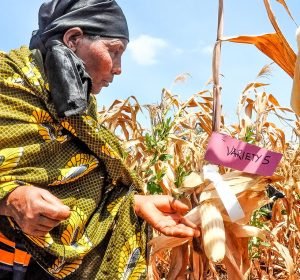
The gender science network at IITA has made significant progress in its efforts to enhance gender research at the institute. The network, which is made up of IITA social and biophysical scientists, Youth Program technical experts, and staff from other units, has finalized its working strategy that articulates how the network will operate in 2020 and beyond to help strengthen gender research at IITA.
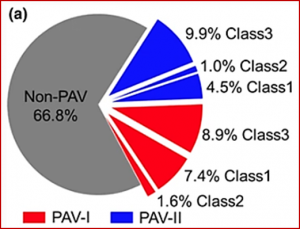
There is increasing evidence that genes from a given crop genotype are far to cover all genes in that species; thus, building more comprehensive pan-genomes is of great importance in genetic research and breeding. Obtaining a thousand-genotype scale pan-genome using deep-sequencing data is currently impractical for species like barley which has a huge and highly repetitive genome. To this end, we attempted to identify barley pan-genome sequence anchors from a large quantity of genotype-by-sequencing (GBS) datasets by combining genetic mapping and machine learning algorithms.
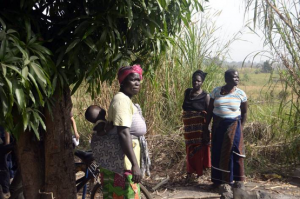
The Board of the Green Climate Fund today approved several new projects, including one for Côte d'Ivoire that marks the first time the Food and Agriculture Organization of the United Nations has helped an African country obtain a grant from the international entity. Along with the $11.8 million approval for Côte d'Ivoire, other two FAO-led projects in Armenia and Colombia, for a total amount of $58.5 million, including $10.5 million in cofinancing, received approval from the Green Climate Fund, a unique global platform mandated to invest in low-emission and climate-resilient development.
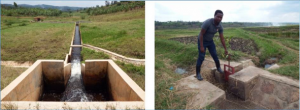
The Nyagatare district (Eastern Province) is Rwanda’s breadbasket - a vast area of agricultural land providing food for the entire country. The people of this district are mainly farmers, rearing livestock and cultivating crops such as maize and rice, but they suffer a long dry season stretching from June to mid-September and, consequently, water has always been a vital, much sought-after resource - with competition for it high.
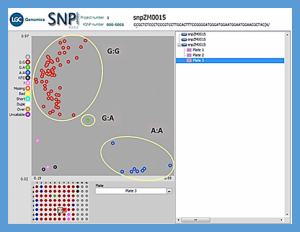
The number of drought and low-N tolerant hybrids with elevated levels of provitamin A (PVA) in sub-Saharan Africa could increase when PVA genes are optimized and validated for developed drought and low-N tolerant inbred lines. This study aimed to (a) determine the levels of drought and low-N tolerance, and PVA concentrations in early maturing PVA-quality protein maize (QPM) inbred lines,

The Director-General of the Food and Agriculture Organization, QU Dongyu, today congratulated Roberto Azevêdo on his service as Director-General of the World Trade Organization and paid tribute to his efforts to strengthen co-operation between the two agencies.

ISAAA AfriCenter will host a live webinar titled Animal Biotechnology: The Next Frontier on Thursday, August 27, 2020, at 12:00 GMT. The webinar will explore how molecular biology tools are being employed in improving animals' suitability for agricultural, industrial, and pharmaceutical applications.
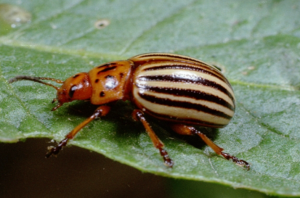
We examined the genetic features underlying leptine glycoalkaloid mediated Colorado potato beetle (Leptinotarsa decemlineata) host plant resistance in a diploid F2 mapping population of 233 individuals derived from Solanum chacoense lines USDA8380-1 and M6. The presence of foliar leptine glycoalkaloids in this population segregated as a single dominant gene and displayed continuous distribution of accumulated quantity in those individuals producing the compound.
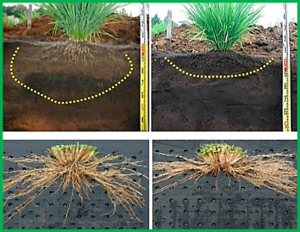
Scientists from the National Agriculture and Food Research Organization of Japan and partners showed that DEEPER ROOTING 1 (DRO1) homologs could be useful for the controlled breeding of root system architectures that are adapted to abiotic stress conditions caused by climate change. The research article is published in Proceedings of the National Academy of Sciences of the USA (PNAS).
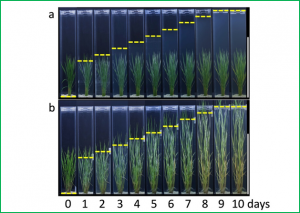
Two antagonistic genes involved in rice plant stem growth were discovered by scientists at Nagoya University and their colleagues in Japan. The two genes are called ACCELERATOR OF INTERNODE ELONGATION 1 (ACE1) and DECELERATOR OF INTERNODE ELONGATION 1 (DEC1) and were also found in plants such as barley and other grasses. Gibberellic acid is a key driver of plant growth, activating cell division in the stem tissue and causing the stem to lengthen.
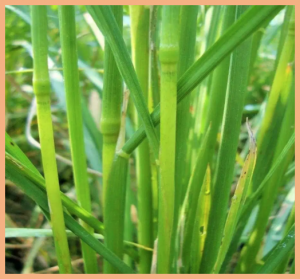
The purple color of the leaf sheath in rice is dependent on the accumulation of anthocyanins such as cyanidin 3-O-glucoside (C3G) and peonidin 3-O-glucoside (P3G). Although many genes related to leaf sheath color have been mapped, the genetic basis for leaf sheath color is not yet clear. Here, PSH1 (purple leaf sheath 1) was mapped to chromosome 1 using an F2 and a RIL population. Map-based cloning and transformation assays further divided PSH1 as two tightly linked bHLH genes, Rb1 and Rb2. Ectopic expression of these two genes resulted in substantial accumulation of C3G and P3G in the leaf blade, leaf sheath and pericarp.
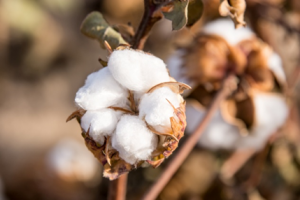
Scientists from Alagappa University in India conducted a study to analyze the performance of insect resistant Bt cotton in rainfed areas. The results are published in Agricultural Economics Research Review 2020. Bt cotton is the only genetically engineered crop approved for planting in India. To fully understand its performance, farm-level data from 150 sample farmers cultivating cotton in rainfed areas in Tamil Nadu were collected.