


News & Events
News & Events
Antifungal activity and action mechanism of thymol against rice blast fungus Magnaporthe oryzae
Friday, 12/12/2025 | 08:02:46
Rice blast (Magnaporthe oryzae) is one of the most devastating disease in rice. There is an urgent need to find effective and environmentally friendly chemicals for the prevention and control of rice blast. In this study, we evaluated the antifungal activities of five plant-derived essential oils: black pepper essential oil, perilla essential oil, thyme essential oil, peony essential oil, and rosemary essential oil, against M. oryzae. Specifically, thyme essential oil exhibited an excellent antifungal activity at a concentration of 1 μL/mL.
Scientists Uncover Genetic Switch for Strawberry Aroma
Friday, 12/12/2025 | 08:01:27
Researchers at the Centre for Research in Agricultural Genomics (CRAG) have made a breakthrough in understanding what makes strawberries smell and taste appealing. In a study published in Horticulture Research, scientists successfully identified the FvHI gene as a key molecular regulator that controls the fresh, characteristic fragrance of the fruit. This gene acts as a switch, modulating the balance of aromatic compounds that consumers associate with a high-quality strawberry, paving the way for targeted breeding programs to improve fruit flavor.
UN World Soil Day 2025: Healthy Soils for Healthy Cities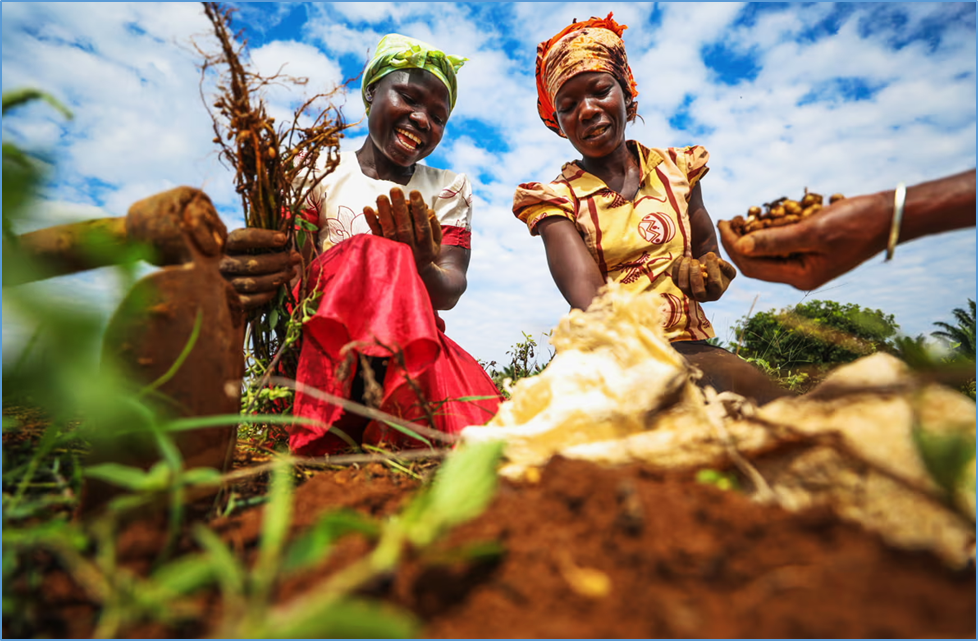
Friday, 12/12/2025 | 07:59:39
On this UN World Soil Day, we are reminded that healthy soils are not only the foundation of life in rural drylands but are equally essential to the health and resilience of our cities.
This year’s theme, ‘Healthy Soils for Healthy Cities,’ highlights a simple yet powerful reality that the condition of rural soils shapes the water we drink, the food we eat, and the green spaces that make cities livable.
Even the most urban communities depend on the soils that sustain both smallholder farms and the broader food systems on which we all depend.
CRISPR-Cas9 mediated editing of starch branching enzyme, SBE2 gene in potato for enhanced resistant starch for health benefits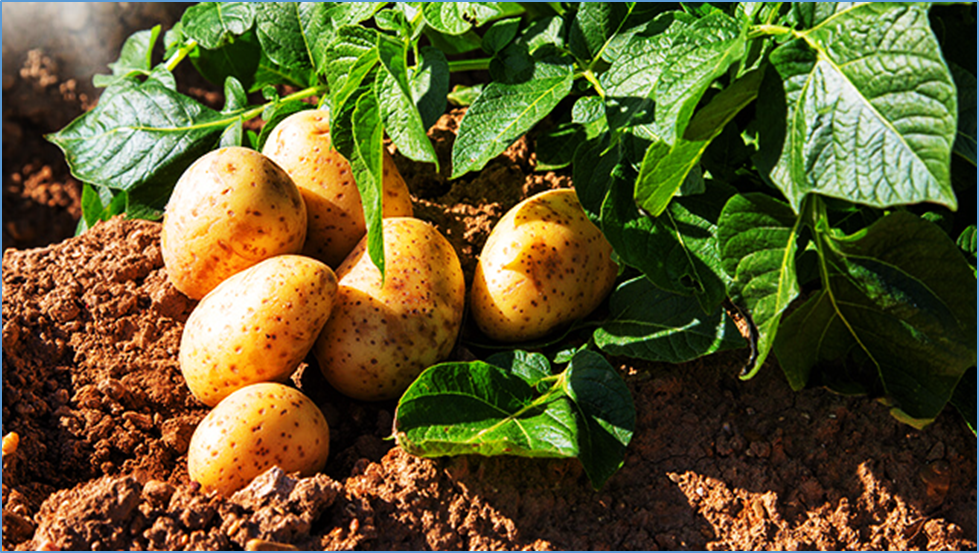
Thursday, 11/12/2025 | 08:08:50
Potato is an important vegetatively propagated, starch-rich tuber crop. High amylose potatoes containing more resistant starch offer healthier food alternatives. However, the resistant starch content is low in most cultivated potato varieties. In this study, targeted mutation of the starch branching enzyme2 (SBE2.1 & SBE2.2 isoforms) had been done in the commercially significant potato cultivar, Kufri Chipsona-I using Clustered regularly interspaced short palindromic repeats-CRISPR-associated protein 9 (CRISPR-Cas9 system)
Gene Editing Improves Soybean Grain Quality for Animal Feed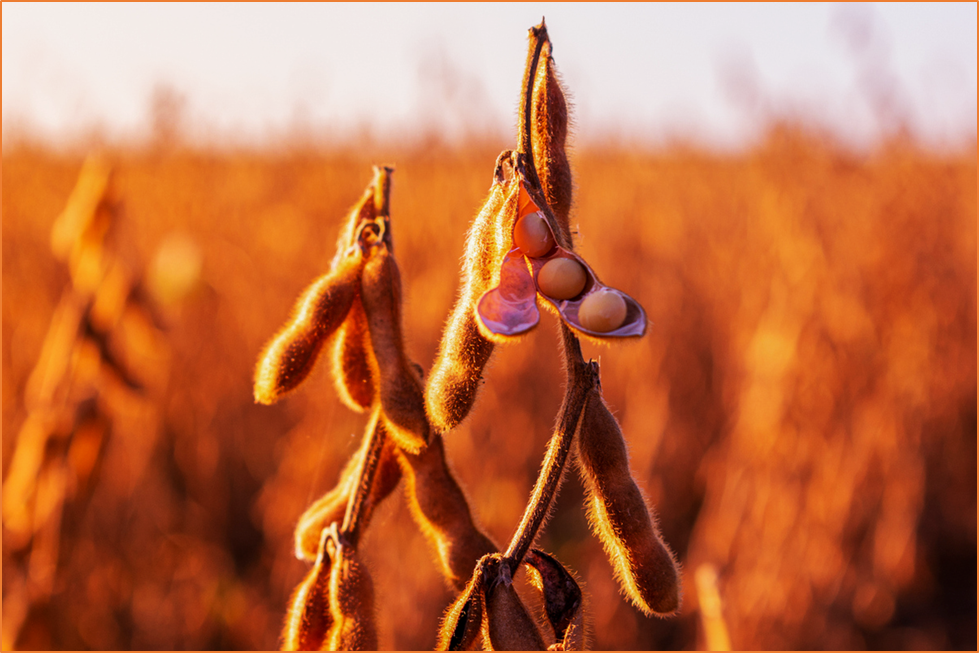
Thursday, 11/12/2025 | 08:06:48
Researchers from the State University of Londrina (Universidade Estadual de Londrina) and partners in Brazil used CRISPR-Cas9 gene editing to inactivate the Le1 gene in soybean to improve grain digestibility for animal feed. The study sought to reduce lectin activity by targeting this gene in the soybean cultivar BRS 537 to limit nutrient absorption in monogastric animals.
CGIAR supports innovative new Brazil-led accelerator RAIZ
Thursday, 11/12/2025 | 08:06:08
RAIZ addresses one of today’s most urgent challenges. With over 1 billion hectares of agricultural land already degraded, food security, biodiversity, and climate stability for more than 3 billion people are under threat. The RAIZ accelerator will unite governments and investors behind a shared goal: restoring the world’s farmland to strengthen food security, tackle climate breakdown, and protect biodiversity.
CRISPR/Cas9-mediated inactivation of the soybean agglutinin Le1 gene to improve grain quality
Wednesday, 10/12/2025 | 08:19:31
This study applied CRISPR/Cas9 genome editing to inactivate soybean agglutinin, a well-known antinutritional factor in legume seeds, aiming to improve grain digestibility for animal feed. The Le1 gene (Glyma.02G012600), which encodes the major lectin in soybean seeds, was specifically targeted in the soybean cultivar BRS 537. To achieve this, a binary vector delivered via Agrobacterium tumefaciens transformation method was employed, carrying two gRNAs that generated 20 independent events and achieved an editing efficiency of 10%.
CRISPR Boosts Resistant Starch in Potato
Wednesday, 10/12/2025 | 08:18:32
Researchers from Himachal Pradesh University, ICAR-Central Potato Research Institute, and ICAR-Indian Institute of Wheat and Barley Research in India have successfully developed high-amylose potatoes using CRISPR-Cas9. The team targeted two starch-branching enzyme genes, SBE2.1 and SBE2.2, in the widely grown potato variety Kufri Chipsona-I to increase its resistant starch content.
CRISPR Wheat Produces Own Fertilizer
Wednesday, 10/12/2025 | 08:17:49
Researchers at the University of California, Davis, successfully developed wheat plants that can produce their own fertilizer. This breakthrough, reported in the Plant Biotechnology Journal, could help reduce air and water pollution and lower farming costs.
The research team, led by Prof. Eduardo Blumwald from the Department of Plant Sciences, used the CRISPR gene editing tool to make a naturally occurring chemical. When the plant releases the excess chemical into the soil, it stimulates soil bacteria to undergo nitrogen fixation. Through this process, the nitrogen in the air is converted into a form that can be used by the plants to grow.
Traits improvement of wild rice O. rufipogon via multiplex genome editing
Tuesday, 09/12/2025 | 08:20:29
Multiplex genome editing of seven genes for the rapid improvement of target traits in wild rice Oryza rufipogon produced lines with enhanced agronomic traits, including erect plant architecture, shortened awns, yellowish hull color, reduced seed shattering, white-colored pericarps, and other improvements.
Rice, a global staple food, is critical for food security. The cultivated Oryza sativa, domesticated from wild O. rufipogon, derives ~80% of its 993 identified domestication-related genes from O. rufipogon and 20% from South/Southeast Asian wild O. nivara (Jing et al., 2023).
Gene Editing Elucidates a Vital Defense Switch in Rice
Tuesday, 09/12/2025 | 08:19:02
Scientists from Tamil Nadu Agricultural University used CRISPR-Cas9 to investigate a vital gene in rice called OsNH2 and understand the plant's defense mechanism in fighting diseases. Their findings are available in BioRXiv.
The study found that rice plants where the OsNH2 gene was essentially broken or removed became dramatically more vulnerable to two major threats: sheath blight (a fungal infection) and bacterial leaf blight (BLB). This discovery immediately established the OsNH2 as a vital gene in the plant's overall health and resistance.
FAO Food Price Index declines in November for third consecutive month
Tuesday, 09/12/2025 | 08:18:00
World food commodity prices declined in November, led by lower international quotations for all major staple foods except cereals, according to the benchmark measure released Friday by the Food and Agriculture Organization of the United Nations (FAO).
The FAO Food Price Index, which tracks monthly changes in the international prices of a basket of globally-traded food commodities, averaged 125.1 points in November, down 1.2 percent from its revised October level. The index has now declined for three consecutive months, standing 2.1 percent below its November 2024 level and 21.9 percent lower than its peak in March 2022.