


News & Events

Wageningen University and Research, Public Religion Research Institute, Asociación Agraria de Jóvenes Agricultores, and Farmers Scientists Network jointly organized a webinar for stakeholders in Europe. Prof. Justus Wesseler of the Wageningen University and Research moderated a panel consisting of ISAAA Chair Dr. Paul S. Teng, ISAAA Global Coordinator Dr. Mahaletchumy Arujanan, ISAAA AfriCenter Program Officer Ms. Bibiana Iraki, Mr. Max Kardung of Wageningen University and Research, and Mr. Daniel Magondu of the Society for Biotech Farmers of Kenya.

The U.K. strain of COVID-19 virus maybe 70% more transmissible than the previously reported types, though no enough evidence yet if it is more deadly. This led UK Prime Minster Boris Johnson to place tighter COVID-19 restrictions in London and southeastern England to contain the fast-spreading virus. In early December 2020, a group of UK scientists gathered virtually to report the spread of pandemic coronavirus.
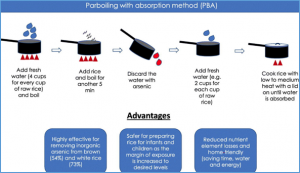
Inorganic arsenic (iAs) is a group 1 carcinogen, and consumption of rice can be a significant pathway of iAs exposure in the food chain. Although there are regulations in place to control iAs for marketed rice in some countries, additional measures are explored to remove arsenic from rice. Due to the surface-bound and soluble nature of iAs, previous studies have shown that it can be removed to a significant extent using different cooking methods.
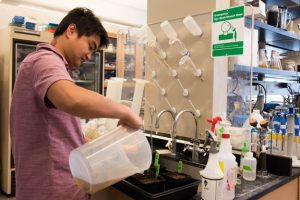
Scientists from the University of Missouri led by Prof. Jay Thelen has found a way to "knock out" a family of genes responsible for regulating fatty acid production in the leaves of plants rather than its seeds. The results of this study are published in the journal Nature Communications.
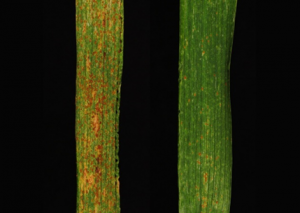
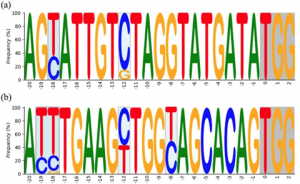
The use of Target activation-induced cytidine deaminase (Target-AID) base-editing technology with the CRISPR-Cas 9 system fused with activation-induced cytidine deaminase (AID) resulted in the substitution of a cytidine with a thymine. In previous experiments focusing on a single target gene, this system has been reported to work in several plant species, including tomato (Solanum lycopersicum L.).
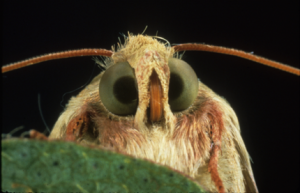
The destructive pink bollworm has negatively impacted cotton production in the southwestern U.S. and northern Mexico, which cost tens of millions of dollars in damage per year. "By analyzing computer simulations and 21 years of field data from Arizona, we discovered that genetically engineered cotton and the release of billions of sterile pink bollworm moths acted synergistically to suppress this pest," said Jeffrey Fabrick from the USDA Agricultural Research Service and one of the co-authors of the study.
Plants are constantly exposed to various biotic and abiotic stresses. Thus, scientists continue to develop tools that help improve the field of plant breeding. These new tools and practices are referred to as plant breeding innovations, which include transcription activator-like effector nucleases (TALENs), clustered regularly interspaced short palindromic repeats (CRISPR), zinc-finger nucleases (ZFNs), and homing endonucleases or meganucleases.
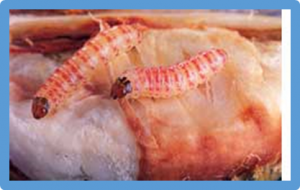
Invasive organisms pose a global threat and are exceptionally difficult to eradicate after they become abundant in their new habitats. We report a successful multitactic strategy for combating the pink bollworm (Pectinophora gossypiella), one of the world’s most invasive pests. A coordinated program in the southwestern United States and northern Mexico included releases of billions of sterile pink bollworm moths from airplanes and planting of cotton engineered to produce insecticidal proteins from the bacterium Bacillus thuringiensis (Bt).

Plants integrate numerous signals in order to adapt their shape to their environment, modifying their tissues structurally and biochemically so that stems, roots, branches, and leaves have the appropriate shape, orientation, and mechanical properties to track the sun, resist gravity, and harness nutrients. In PNAS, Moulton et al. (1) present a compact mathematical description of the essential components of these tropic responses, providing a framework linking sensing, hormone transport, and growth to three-dimensional form.

As the COVID-19 pandemic continues to sweep across the globe, the media and the general public are turning to biomedical scientists in hopes of quick remedies. And while terms such as “contact tracing,” “convalescent plasma,” and “PCR testing” become part of our daily vocabulary, a new spotlight has been shone on the importance of academic scientists in the fight for human healthcare and well-being. Yet, for years, few have acknowledged the lack of appreciation experienced by science’s primary workforce: graduate students and postdoctoral fellows.
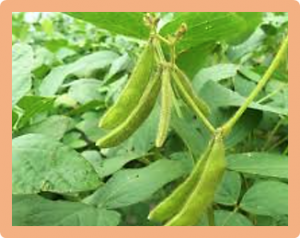
Flooding stress causes severe yield reduction in soybean worldwide. The development of stress-tolerant cultivars could be an effective measure to reduce the negative effects of flooding stress. Molecular information on the gene expression pattern of tolerant and susceptible genotypes under flooding stress could be valuable to improve the flooding tolerance in soybean. The objective of this study was to analyze the differentially expressed genes (DEGs)