


News & Events

The Global Forum for Food and Agriculture (GFFA) will be organized from 18 to 22 January 2021, with the title of “How to feed the world in times of pandemics and Climate change”, by The Federy of Food and Agriculture, Berline, Europe. The programme is followed as:
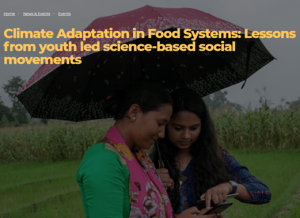
To achieve a transformation in food systems under climate change, engagement of young people is crucial. They are the next generation and are both vulnerable to current and future impacts of climate change, but also offer ways forward as important agents of change in their households, schools, business ventures, communities, countries and regions.

Rice blast, caused by Pyricularia oryzae, is one of the most damaging fungal diseases affecting rice. Understanding how the pathogen's race structure varies over time supports the efforts of rice breeders to develop improved cultivars. Here, the race structure of P. oryzae in Guangdong province, China, where rice is cropped twice per year, was assessed over 18 seasons from 1999 through 2008
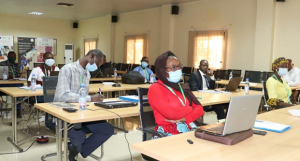
Budding agricultural researchers are being trained in crop modeling to take on pressing and ever-present challenges of land, climate and food security. In a recent training program at ICRISAT-Mali, eight students learned to model agrosystems with DSSAT software, taking into account smallholder farming constraints. Crop modeling is a process that describes different stages of crop growth and development depending on weather, climate and soil conditions adapted to the environmental context,

Covid-19 has highlighted opportunities for improved agri-food systems – digital extension systems, increased farm mechanization, decentralized markets and improved farmgate procurement in addition to improved farmer-consumer connect and more efficient value chains. Without protection against the virus, agriculture will continue with less face to face contact. I hope the changes in agriculture will focus on areas exposed by the pandemic as these will also contribute to the long-term goals of sustainable development.
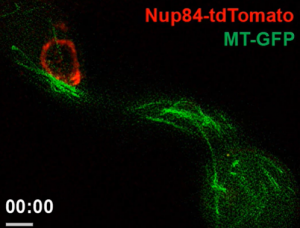
The arrangement of the nuclear envelope in the rice blast fungus, Magnaporthe oryzae, was previously undetermined. Here, we identified two conserved components of the nuclear envelope, a core nucleoporin, Nup84, and an inner nuclear membrane protein, Src1. Live-cell super-resolution structured illumination microscopy revealed that Nup84-tdTomato and Src1-EGFP colocalized within the nuclear envelope during interphase and that Nup84-tdTomato remained associated with the dividing nucleus.

The FAO Director-General QU Dongyu today held a meeting with all senior managers of the UN agency, including FAO representatives (FAORs) to about 130 countries, to present the Organization’s priorities for 2021. Opening the fourth meeting of its kind, with almost 200 participants, Qu highlighted that all the strategic decisions, transformative actions and priorities that he had introduced since his arrival at FAO followed a clear, coherent and transparent philosophy of change. He added that his Manifesto contains concrete action plans that are based on numerous consultations with Members and experts.

Emphasizing the interconnectedness of environmental, animal and human health, FAO Director-General QU Dongyu reiterated FAO's commitment to continue supporting the mainstreaming of biodiversity across agriculture and food sectors also by the Hand in Hand Initiative. "The COVID-19 pandemic has highlighted the close links between human, animal and environmental health, in a context of increased human-livestock-wildlife contacts and ecosystem degradation," the Director-General said Monday, noting the "importance of environmental sustainability as a key determinant of a long term "One Health for All".
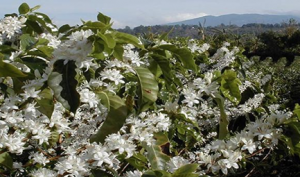
Coffee is an important commodity in the international market. However, little attention is given to it and its breeding research in Nigeria. This has resulted to low production and foreign earning. The information on relationship between yield and yield- related characters is an excellent and significant tool for breeding. The experiment was conducted on Cocoa Research Institute of Nigeria coffee germplasms.
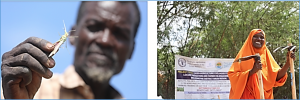
In December 2019, Cyclone Pawan hit Ali Mahamud Rubaax’s village of Dharkeynley in Beletweyne, central Somalia. The storm’s rain caused the river levels to reach their maximum, breaking their banks and overflowing into the village and surrounding areas leaving most of the town under water. About 182 000 people from this district were displaced. Some drowned. Others had gone missing.
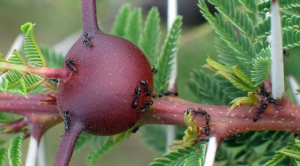
Researchers from the John Innes Centre reported the successful increase in the production of a bacterial strain of Streptomyces formicae by 10 times using the genome editing technique CRISPR-Cas9. The findings can lead to further development in the research and production of antibiotics. Streptomyces formicae bacterial strain is found in nests of species of the African ant. The ants use the antibiotic-producing bacteria to protect themselves and their food source from pathogens. Half of the existing antibiotics today are derived from formicamycin's specialized metabolites.
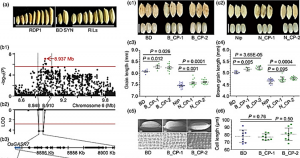
Identification of quantitative trait loci (QTLs) for grain length (GL) is important to rice breeding for increasing grain yield and appearance quality. Recent studies have identified a number of QTLs/genes as key grain length regulators by linkage mapping or genome‐wide association study (GWAS). These regulators are involved in G protein signalling, phytohormone signalling or transcriptional regulation, etc (Li et al., 2018).