


News & Events

Over 90 agriculture ministers from all over the world, together with high-level representatives of international organizations, agreed to act in response to the COVID-19 pandemic, preventing further pandemics, and on climate change mitigation and adaptation. This was one of the most important events during the Global Forum for Food and Agriculture held virtually and hosted in Berlin, Germany in January 2021.

The rapid development of the CRISPR–Cas9, –Cas12a and –Cas12b genome editing systems has greatly fuelled basic and translational plant research1,2,3,4,5,6. DNA targeting by these Cas nucleases is restricted by their preferred protospacer adjacent motifs (PAMs). The PAM requirement for the most popular Streptococcus pyogenes Cas9 (SpCas9) is NGG (N = A, T, C, G)7, limiting its targeting scope to GC-rich regions. Here, we demonstrate genome editing at relaxed PAM sites in rice (a monocot) and the Dahurian larch (a coniferous tree), using an engineered SpRY Cas9 variant8.
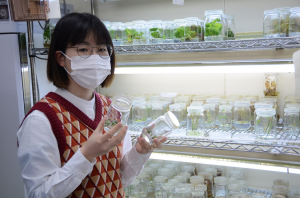
Japanese scientists successfully developed paintbrush lily plant varieties that are simultaneously triploid and hexaploidy using endosperm culture. This is one of the first studies to use the technique for non-cereal monocotyledonous plants. Researchers from both Hokkaido University and Chiba University turned their attention to the ornamental paintbrush lily and used the plant tissue culture (PTC) technique called endosperm culture to achieve polyploidy.

As COVID-19 vaccination programs are being rolled out by governments for adults, pharmaceutical companies have started the next phase of testing vaccines for children. Even though less percentage of COVID-19 cases were involving children, medical experts are pushing for vaccinations for adults and children to control the pandemic.
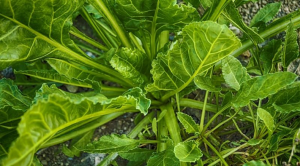
There are two types of fruit of spinach (Spinacia oleracea L.), spiny and spineless, which are visually distinguishable by the spines of fruit coat. In spinach breeding, the fruit characteristic is an important agronomic trait that have impacts on “seed” treatment and mechanized sowing. However, the gene(s) controlling the fruit spiny trait have not been characterized and the genetic mechanism of this trait remained unclear.

Experts from Capital Medical University, Beijing, developed a simple, low-cost, and efficient custom transcription activator-like effector (TALE) gene synthesis method using a twin primer assembly. The method is published in BioTechniques. According to Song Wang and colleagues, the method uses the denaturation/reannealing nature of double-stranded DNA to create a unique single-stranded DNA overhang for accurate sequencing of TALE monomers in an engineered multimer

China’ s Ministry of Agriculture and Rural Affairs has approved two genetically modified (GM) corn varieties from Bayer AG and Syngenta AG for importation. The two varieties, herbicide tolerant and insect resistant MON87411 and MZIR098 are approved for imports for five years starting December 2020, according to a list published on the Ministry website.

We recently reported that a genetic transformation of the RNA-Binding-Protein (McRBP), an RNA chaperone gene derived from common ice plant (Mesembryanthemum crystallinum), alleviated injury and loss of biomass production by salt stress in Eucalyptus camaldulensis in a semi-confined screen house trial. In this study, we assessed the potential environmental impact of the transgenic Eucalyptus in a manner complying with Japanese biosafety regulatory framework required for getting permission for experimental confined field trials.

The U.S Department of Agriculture's (USDA) Animal and Plant Health Inspection Service (APHIS) has announced the deregulation of petunia varieties, designated as A1-DFR, developed using genetic engineering to produce orange flowers. The Notice in the Federal Register states that APHIS is advising the public that the petunias containing A1 gene from maize (A1-DFR Petunias), genetically engineered to add a new color (orange) and brilliance to the flowers is no longer considered regulated under their regulations governing the introduction of certain genetically engineered organisms.

The European Commission has authorized five genetically modified (GM) crops (3 maize, 2 soybeans) and renewed the authorization for three maize crops used for food and feed. The announcement was made on the European Union's Daily News which was published on January 22, 2021. All of the eight GM crops have gone through a comprehensive and stringent authorization procedure, including a favorable scientific assessment conducted by the European Food Safety Authority (EFSA).
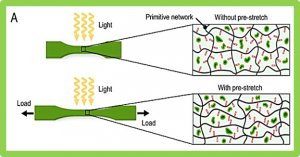
The mechanical properties of engineering structures continuously weaken during service life because of material fatigue or degradation. By contrast, living organisms are able to strengthen their mechanical properties by regenerating parts of their structures. For example, plants strengthen their cell structures by transforming photosynthesis-produced glucose into stiff polysaccharides. In this work, we realize hybrid materials that use photosynthesis of embedded chloroplasts to remodel their microstructures. These materials can be used to three-dimensionally (3D)-print functional structures, which are endowed with matrix-strengthening and crack healing when exposed to white light.
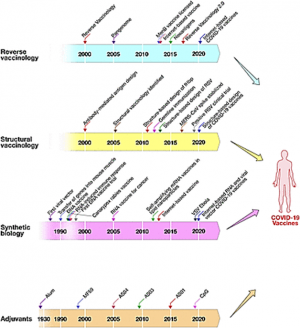
The COVID-19 pandemic is a shocking reminder of how our world would look in the absence of vaccination. Fortunately, new technologies, the pace of understanding new and existing pathogens, and the increased knowledge of the immune system allow us today to develop vaccines at an unprecedented speed. Some of the vaccine technologies that are fast-tracked by the urgency of COVID-19 may also be the answer for other health priorities, such as antimicrobial resistance, chronic infections, and cancer, that the post-COVID-19 world will urgently need to face.