


News & Events
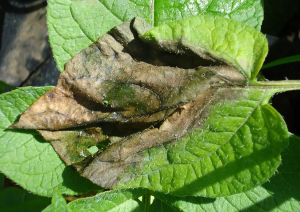
Researchers from North Carolina State University (NC State) continue to track the evolution of different strains of Phytophthora infestans, the plant pathogen that caused the Irish potato famine in the 1840s, which set down roots in the United States before attacking Europe. NC State plant pathologists studied the genomes of about 140 pathogen samples – historic and modern – from 37 countries on six continents to track the evolution of different strains of P. infestans, a major cause of late-blight disease on potato and tomato plants.
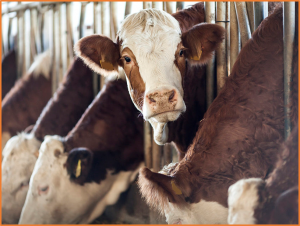
According to the framework of the regulatory agenda, USDA is considering appointing the Animal and Plant Health Inspection Service to be in charge of the assessment of the susceptibility of biotech animals to pests or diseases or if they are capable of transmitting these pests or diseases. On the other hand, the Food Safety Inspection Service of the USDA would be responsible for the pre-slaughter food safety assessment.
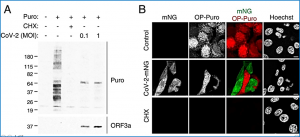
The ongoing COVID-19 pandemic has caused an unprecedented global health crisis. Severe acute respiratory syndrome coronavirus 2 (SARS-CoV-2) is the causative agent of COVID-19. Subversion of host protein synthesis is a common strategy that pathogenic viruses use to replicate and propagate in their host. In this study, we show that SARS-CoV-2 is able to shut down host protein synthesis and that SARS-CoV-2 nonstructural protein NSP14 exerts this activity. We show that the translation inhibition activity of NSP14 is conserved in human coronaviruses. NSP14 is required for virus replication through contribution of its exoribonuclease (ExoN) and N7-methyltransferase (N7-MTase) activities.

The synthetic gene drive technology is quickly becoming popular with the emergence of CRISPR-Cas9. Two experts from Australia broke down the details of this rapidly developing technology in the latest ISAAA webinar, and explained how it can be used for the benefit of agriculture, biodiversity conservation, and vector-borne disease control. The session entitled What is Gene Drive? was hosted by ISAAA on June 10, 2021 via Zoom.
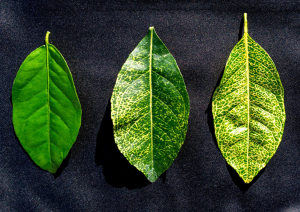
Scientists at the University of California Riverside are hoping the RNA of an obscure infection can one day be used like a Trojan horse to deliver life-saving treatments to citrus trees. Citrus yellow vein disease, discovered 64 years ago in Riverside has finally been unraveled, a significant step toward harnessing its unique properties. In the past decade, Huanglongbing, also known as citrus greening disease has caused a 72% decline in oranges used for juice and a 21% decrease in the American fresh citrus fruit market.
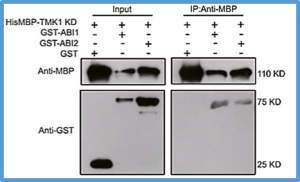
Differential concentrations of phytohormone trigger distinct outputs, which provides a mechanism for the plasticity of plant development and an adaptation strategy among plants to changing environments. However, the underlying mechanisms of the differential responses remain unclear. Here we report that a high concentration of auxin, distinct from the effect of low auxin concentration, enhances abscisic acid (ABA) responses in Arabidopsis thaliana

Agricultural experts continue to call for increased adoption of crop biotechnology citing it as one of the key tools required to address the growing food demand as well as other challenges that the world continues to face. During a webinar on biotechnology as a tenable solution to address hunger in Africa organized by the African Agricultural Technology Foundation (AATF), the experts expressed concern that the more we delay adoption of the technology
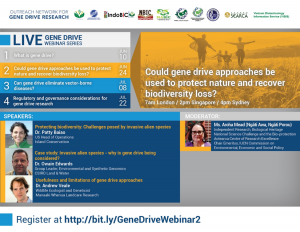
ISAAA, in partnership with the Outreach Network for Gene Drive Research and the Biotechnology Information Centers, will be conducting the second session of the Gene Drive Webinar Series. The next session titled Could gene drive approaches be used to protect nature and recover biodiversity loss? will be held on June 24, 2021 at 2 PM Manila (7 AM London/4 PM Sydney) via Zoom.
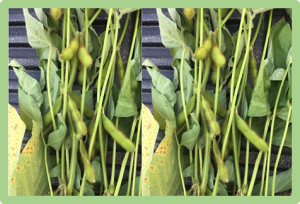
The search for high-yielding genotypes and that are tolerant to abiotic stresses has been a major goal in plant breeding. Thus, the use of technologies such as precision agriculture associated with remote sensing tools for plant phenotyping has increased. The hypothesis of this research was that soya bean genotypes respond differently to low and adequate base saturation levels in the soil and that vegetation indexes can be efficient auxiliary tools in plant phenotyping for this purpose.
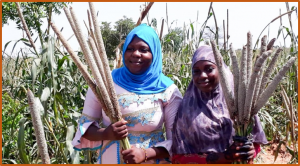
A delegation of seed manufacturers visiting ICRISAT’s research station in Sadoré on 15 February was keen to adopt the hybrid, ICMH 177111, after learning about its performance. The hybrid was tested at more than 15 experimental sites from 2016-18. It has high resistance to downy mildew and produces grain yields between 2.5 and 2.8 tons per hectare. On over 2500 farmers’ fields across Niger, Nigeria, Mali, Burkina Faso, Senegal and Ghana, it outperformed control varieties (e.g. ICMH 147007).
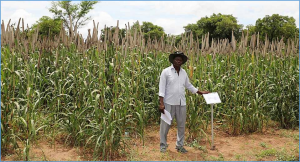
Burkina Faso recently approved the commercial use of its first pearl millet hybrid called Nafagnon. With the approval, the single-cross hybrid also became the first of its kind to be approved in West and Central Africa. Nafagnon yields as much as 45 percent higher than popular variety Misari-1. It is more resistant to downy mildew and has higher fodder yield potential. ICRISAT’s Pearl Millet Breeding program for West and Central Africa developed Nafagnon in Niger and the Institut de l’Environnement et de Recherches Agricoles (INERA) evaluated it in Burkina Faso. The hybrid’s name means beneficial millet in Bamanankan language. It also goes by ICRISAT Millet Hybrid (ICMH) 147007.

The CRISPR/Cas‐mediated genome editing technology has been widely applied to create knockout alleles of genes by generating short insertions or deletions (indel) in various plant species. Due to the low efficiency of homology‐directed repair (HDR) and difficulties in the delivery of DNA template for HDR, precise genome editing remains challenging in plants. A tandem repeat‐HDR method was developed very recently for sequence replacement in rice, which is most useful for monocots