


News & Events

Matthew V. Tirrell has been at the forefront of efforts to understand and apply the surface and interfacial properties of organic polymers and micellar nanoparticles. His contributions to the field led to his election to the National Academy of Sciences in 2019. Now dean of the Pritzker School of Molecular Engineering at the University of Chicago and a senior scientist at the Argonne National Laboratory,
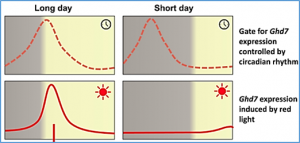
Rice is a facultative short day (SD) plant. In addition to serving as a model plant for molecular genetic studies of monocots, rice is a staple crop for about half of the world's population. Heading date is a critical agronomic trait, and many genes controlling heading date have been cloned over the last 2 decades. The mechanism of flowering in rice from recognition of day length by leaves to floral activation in the shoot apical meristem has been extensively studied.
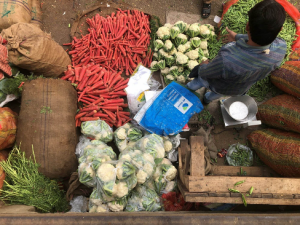
At the United Nations Food System Summit this past September, nutrition was identified as a key action area deserving renewed focus as the world continues its pursuit of the 2030 Sustainable Development Goals. While Zero Hunger is still a primary objective, focusing on this end alone is not enough. Now, as the world prepares for the Nutrition for Growth Summit (N4G), convened by the Government of Japan from 7 to 8 December, this critical challenge for billions is the focus of intense discussion and commitment for action.

While enough food is produced to feed everyone 1.5 times over, poor diets continue to hold the world back from reaching its full potential. The Covid-19 pandemic has set back the fight yet further. This year’s Nutrition for Growth Summit, held in Tokyo this week, provided a platform from which to accelerate global progress towards ending malnutrition. The Summit was arguably one of the most important legacies of the London 2012 Olympics, and it has remained tied to the games — being held every four years in the Olympiad host country — ever since.

Predicting phenotypes from genetic (G), environmental (E), and management (M) conditions is a long-standing challenge with implications to agriculture, medicine, and conservation. Most methods reduce the factors in a dataset (feature engineering) in a subjective and potentially oversimplified manner. Deep neural networks such as Multilayer Perceptrons (MPL) and Convolutional Neural Networks (CNN) can overcome this by allowing the data itself to determine which factors are most important.

For over three decades, developmental neurobiologist John L. R. Rubenstein has been a leader in research on the forebrain, the seat of higher-order brain functions. The Nina Ireland Distinguished Professor in Child Psychiatry at the University of California, San Francisco (UCSF), Rubenstein has identified transcription factor (TF) genes, transcriptional and signaling pathways, and more recently, TF networks that control regional and cell-type specification in the developing cerebral cortex and basal ganglia.
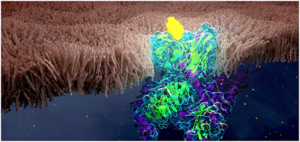
Opioids continue to ravage large swaths of the United States. Buffeted by social isolation, financial pressures, and limited mental health resources during the coronavirus disease 2019 (COVID-19) pandemic, addiction and its ill effects have only worsened in the past year. More than 100,000 people died from drug overdose between April 2020 and the end of April 2021, a roughly 30% increase in deaths compared with the previous year and an all-time high for the number of overdose deaths recorded in the United States.
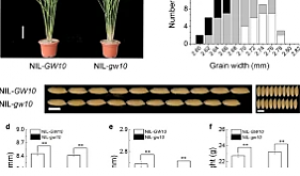
Grain size and grain number play extremely important roles in rice grain yield. Here, we identify GW10, which encodes a P450 subfamily protein and controls grain size and grain number by using Lemont (tropical japonica) as donor parent and HJX74 (indica) as recipient parent. The GW10 locus was mapped into a 14.6 kb region in HJX74 genomic on the long arm of chromosome 10. Lower expression of the gw10 in panicle is contributed to the shorter and narrower rice grain, and the increased number of grains per panicle. In contrast, overexpression of GW10 is contributed to longer and wider rice grain.
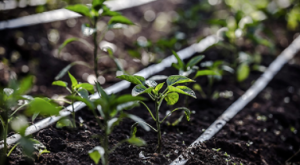
Healthy soils lay at the foundations of agricultural development, healthy and nutritious food production, and essential ecosystem services, which are crucial to our basic survival as well as our planet’s sustainable future. With this year’s theme "Halt soil salinization, boost soil productivity", World Soils Day 2021 aims to raise awareness of the importance of maintaining healthy ecosystems and human well-being by addressing the growing challenges in soil management.
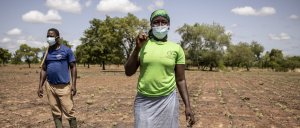
The Food and Agriculture Organization of the United Nations (FAO) today welcomed a $10 million contribution from the United States of America to its COVID-19 response efforts and to help counter other challenges that threaten human, animal and environmental health, including future pandemics. In a letter to FAO, the U.S. State Department said the funding is intended to support the agency’s COVID-19 Response and Recovery Programme, part of its broader One Health programme.
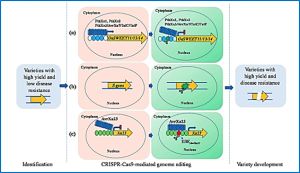
Rice is one of the most important food crops in the world. However, stable rice production is constrained by various diseases, in particular rice blast, sheath blight, bacterial blight, and virus diseases. Breeding and cultivation of resistant rice varieties is the most effective method to control the infection of pathogens. Exploitation and utilization of the genetic determinants of broad-spectrum resistance represent a desired way to improve the resistance of susceptible rice varieties. Recently, researchers have focused on the identification of rice broad-spectrum disease resistance genes, which include R genes, defense-regulator genes, and quantitative trait loci (QTL) against two or more pathogen species or many isolates of the same pathogen species.

Iron is an irreplaceable component of proteins and enzyme systems required for life. This need for iron is a well-characterized evolutionary mechanism for genetic selection. However, there is limited consideration of how iron bioavailability, initially determined by planetary accretion but fluctuating considerably at global scale over geological time frames, has shaped the biosphere.