


News & Events
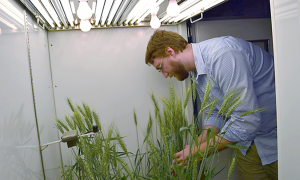
The scientists are subjecting more than a dozen wheat varieties to two major stressors. The first comes from exposure to carbon dioxide (CO2) levels of up to 1,000 parts per million—an atmospheric concentration of the greenhouse gas projected for the turn of the century absent mitigation measures. The other stressor is infection by the insidious fungus Fusarium graminearum. This fungus causes head blight, a costly disease of wheat, barley, and oat crops worldwide that can damage the grain and contaminate it with mycotoxins, rendering the grain unsafe for food or feed use.
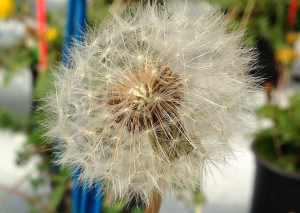
Researchers from KeyGene and Wageningen University & Research (WUR), together with colleagues from Japanese breeding company Takii and New Zealand's Plant & Food Research and Lincoln University have discovered a gene that makes it possible to produce seeds from crops that are genetically identical to the mother plant and that do not need pollination. The gene found was named PAR, from parthenogenesis, the process where egg cells grow into plant embryos without fertilization.
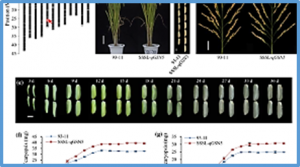
Grain size and grain number are two factors that directly determine rice grain yield; however, the underlying genetic mechanisms are complicated and remain largely unclear. In this study, a chromosome segment substitution line (CSSL), CSSL28, which showed increased grain size and decreased grain number per panicle, was identified in a set of CSSLs derived from a cross between 93-11 (recipient) and Nipponbare (donor). Four substitution segments were identified in CSSL28, and the substitution segment located on chromosome 5 was responsible for the phenotypes of CSSL28.
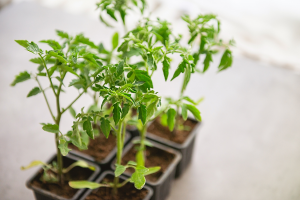
Northeast Agricultural University researchers used CRISPR-Cas9 to investigate the role of transcription factor Solanum lycopersicum salt-related MYB1-like (SlSRM1-like) in tomato leaf development. The results are published in BMC Plant Biology. Several factors affect leaf development, such as the growth environment, gene expression, and hormone synthesis.
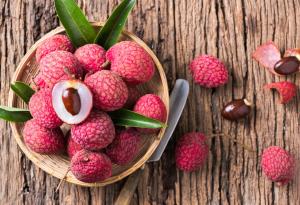
An international team of scientists from China and the United States assembled 15 pseudochromosomes of the genome of Feizixiao, a popular lychee cultivar, and revealed that the fruit was likely independently domesticated more than once in two different places in China. The study primarily unfolded the origin and domestication history of lychee by using Feizixiao as a reference genome and comparing its DNA with other wild and farmed varieties. Specifically, it provided three main important information about the fruit: wild lychees originated in Yunnan province, that there were two separate domestications that occurred in Yunnan and Hainan Island, and that there was a genetic deletion that may have caused different varieties to fruit and flower at different times.
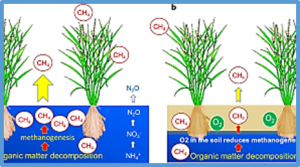
Climate change is expected to increasingly affect rice production through rising temperatures and decreasing water availability. Unlike other crops, rice is a main contributor to greenhouse gas emissions due to methane emissions from flooded paddy fields. Climate change can therefore be addressed in two ways in rice: through making the crop more climate resilient and through changes in management practices that reduce methane emissions and thereby slow global warming. In this review, we focus on two water saving technologies that reduce the periods lowland rice will be grown under fully flooded conditions, thereby improving water use efficiency and reducing methane emissions.
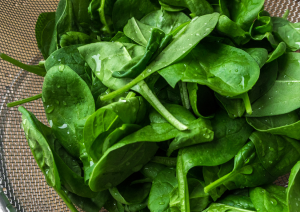
Researchers from Boyce Thompson Institute (BTI) and six universities in China have identified a gene that regulates the concentration of oxalate in spinach, responsible for the gritty-chalky mouthfeel called spinach teeth. The team also found genes to help the plant combat downy mildew. The study compared the genomes of cultivated spinach (Spinacia oleracea) and two of its wild relatives (S. turkestanica and S. tetranda) to identify genes linked to traits of interest to plant breeders, farmers, and consumers.
An interdisciplinary research team from the University of Göttingen has developed a new methodological approach to complete genetic data and fill in the gaps in sequencing. Genetic information is indispensable for modern plant breeding. In previous years, DNA sequencing has become much cheaper, but collecting full genetic information still accounts for a large part of the costs in animal and plant breeding.
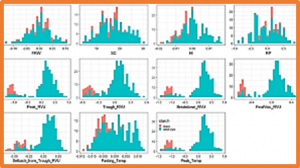
Cassava is both a food and an industrial crop in Africa, South America, and Asia, but knowledge of the genes that control yield and starch pasting properties remains limited. We carried out a genome-wide association study to clarify the molecular mechanisms underlying these traits and to explore marker-based breeding approaches. We estimated the predictive ability of genomic selection (GS) using parametric, semi-parametric,
The Australian Office of the Gene Technology Regulator (OGTR) has received a license application (DIR 188) from Nuseed Pty. Ltd. to conduct a field trial of genetically modified (GM) canola and Indian mustard with altered oil content and herbicide tolerance.The trial is proposed to take place between November 2022 and December 2027, at up to 20 trial sites per year with a maximum area of 150 hectares per year. The trial sites are located in New South Wales, Victoria, and Queensland.
The USDA FAS Global Agricultural Information Network (GAIN) released 2021 updates on the status of agricultural biotechnology in Bangladesh. The Government has shown willingness to adopt and implement a modern agriculture policy framework and guidelines, which support the safe and proper use of biotechnology and other technologies to address food security issues
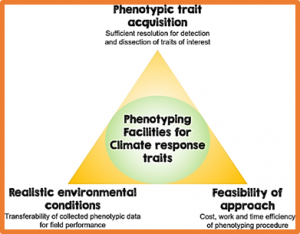
Rising temperatures and changing precipitation patterns will affect agricultural production substantially, exposing crops to extended and more intense periods of stress. Therefore, breeding of varieties adapted to the constantly changing conditions is pivotal to enable a quantitatively and qualitatively adequate crop production despite the negative effects of climate change. As it is not yet possible to select for adaptation to future climate scenarios in the field,