


News & Events
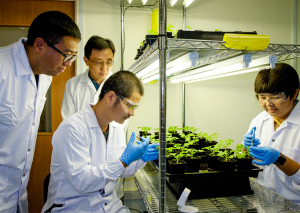
Scientists from Nanyang Technological University (NTU) Singapore have successfully genetically modified an important plant protein responsible for the accumulation of oil in plant seeds and edible nuts. The research team showed that their patent-pending method can increase the oil content in seeds by 15 to 18 percent. The scientists discovered that the secret to helping plants accumulate more oil in their seeds is in one of their proteins called WRINKLED1 (WRI1)

Neoplants, a Paris-based startup, has genetically engineered both a pothos (Epipremnum aureum) plant and its associated root microbiome. The houseplant called Neo P1 is capable of purifying the air as effectively as 30 houseplants, according to Neoplants. The air that circulates in most homes is up to 5 times more polluted than outdoor air due to volatile organic compounds (VOCs).
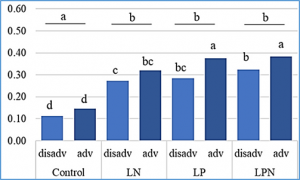
Rice (Oryza sativa L.) is a staple food of Madagascar, where per capita rice consumption is among the highest worldwide. Rice in Madagascar is mainly grown on smallholder farms on soils with low fertility and in the absence of external inputs such as mineral fertilizers. Consequently, rice productivity remains low and the gap between rice production and consumption is widening at the national level. This study evaluates genetic resources imported from the IRRI rice gene bank to identify potential donors and loci associated with low soil fertility tolerance (LFT) that could be utilized in improving rice yield under local cultivation conditions.
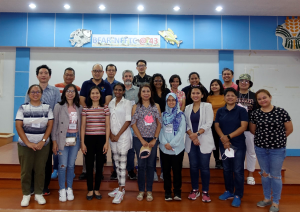
ISAAA Inc. and its partner organizations conducted the 5th Asian Short Course on Agribiotech, Biosafety Regulation, and Communication (ASCA5) from November 7 to 11, 2022 in Manila, Philippines. The workshop is a capacity building initiative by ISAAA Inc. and MABIC that was started in 2018 to create a platform for Asian scientists and regulators to be competent in the regulations and policies related to biotechnology.

The activity intends to provide a platform to present and discuss current, recently approved biotech-related policies, specifically the 2021 JDC and the NCBP Resolution No. 1, Series of 2020. The event is organized by the Southeast Asian Regional Center for Graduate Study and Research in Agriculture (SEARCA), in partnership with ISAAA Inc. and CropLife Asia, Philippine Agriculture and Fisheries Biotechnology Program (DA Biotech Program), Biotechnology Coalition of the Philippines, the International Rice Research Institute, and the Philippine Rice Research Institute.
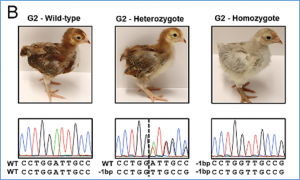
Conventional avian genome editing is mediated by isolation, culture, and genome editing of primordial germ cells (PGCs); screening and propagating the genome-edited PGCs; and transplantation of the PGCs into recipient embryos. The PGC-mediated procedures, however, are technically difficult, and therefore, the conventional method has previously been utilized only in chickens.

A research team at Rice University led by bioengineer Gang Bao is working to reveal potential threats to the efficacy and safety of therapies based on CRISPR-Cas9 gene editing technique, even as they appear to be working as planned. Bao's group point out in a paper published in Science Advances that while off-target edits to DNA have long been a cause for concern, unseen changes that accompany on-target edits also need to be recognized and quantified.
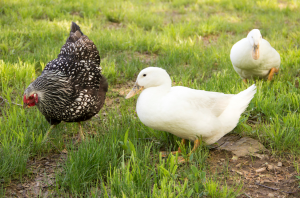
Scientists from the Ohio State University found a way to develop genome-edited chicken and duck lines without having to use primordial germ cells (PGCs). The new method offers a new option for researchers to conduct avian genome editing without conducting technically difficult procedures of the conventional method that is currently only used for chickens.
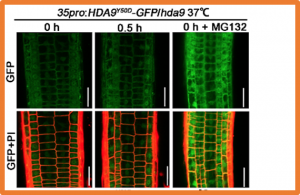
Heat stress limits plant growth, development, and crop yield, but how plant cells precisely sense and transduce heat stress signals remains elusive. Here, we identified a conserved heat stress response mechanism to elucidate how heat stress signal is transmitted from the cytoplasm into the nucleus for epigenetic modifiers. We demonstrate that HISTONE DEACETYLASE 9 (HDA9) transduces heat signals from the cytoplasm to the nucleus to play a positive regulatory role in heat responses in Arabidopsis.

A team of researchers from California Institute for Quantitative Biosciences (QB3), University of California, Berkeley, reported that broad-spectrum CRISPR-Cas13a enables efficient phage genome editing. Their study is published in Nature Microbiology. CRISPR-Cas13 defend against incoming RNA and DNA phages by binding to complementary target phage transcripts followed by general, non-specific RNA degradation.

Duckweed, a common aquatic plant, was the latest interest for innovation by scientists from the United States Department of Energy's Brookhaven National Laboratory and the Cold Spring Harbor Laboratory who thought of engineering the plant to produce high yields of oil that can be harvested to produce biofuels and other bioproducts. The scientists thought of duckweed considering how fast it grows and most of the plant's biomass is in its leaf-like fronds that grow on the surface of ponds.
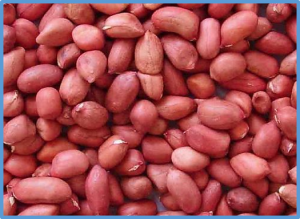
Peanut is an affordable legume known for its nutritional value and phenolic content. The kernel and skin of 14 peanut genotypes contrasting in drought tolerance had their phenolic profiles determined and reactive oxygen species (ROS) scavenging activity evaluated. Firstly, temperature and % EtOH to extract antioxidant phenolic compounds were optimized using response surface methodology (RSM).