


News & Events
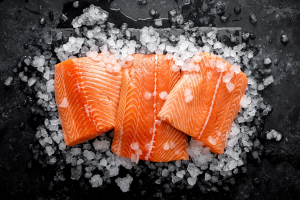
Consumers' food preferences are vital in the success of any genetically modified (GM) or genome-edited food. AquAdvantage® salmon, the first animal GM product approved for human consumption, and its non-GM farmed and wild counterparts were the subject of a consumer perception study to provide insights into food policy development on animal GM products.
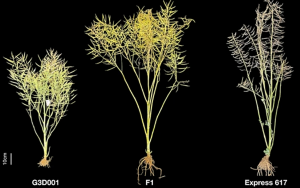
The enhanced performance of hybrids through heterosis remains a key aspect in plant breeding; however, the underlying mechanisms are still not fully elucidated. To investigate the potential role of transcriptomic and epigenomic patterns in early expression of hybrid vigor, we investigated gene expression

The Director General of the Food and Agriculture Organization of the United Nations (FAO), QU Dongyu, launched on Thursday the new FAO report “the status of women in agrifood systems’’ during a high-level event at FAO headquarters. The report provides a comprehensive picture of the status of women working not only in agriculture, but across agrifood systems.

ISAAA through the Philippine Department of Agriculture Biotechnology Program Office's Know The Science: Strengthening Biotech Links project, has released the second issue of Double Helix, the first and only magazine supplement on agricultural biotechnology (agbiotech) for senior high school students taking the Science, Technology, Engineering, and Mathematics (STEM) strand in the country.
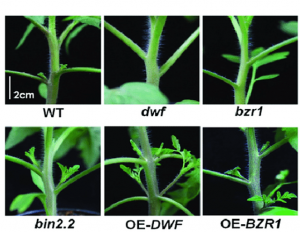
Light plays an important role in determining plant architecture, which greatly influences crop yield. However, the precise mechanisms by which light signaling regulates bud outgrowth remain to be identified. Here, we show that light regulates bud outgrowth via both HY5 and brassinosteroid (BR)-dependent pathways in tomato. Inactivation of the red-light photoreceptor PHYB, or deficiencies in PHYB or the blue-light photoreceptor CRY1a
The COVID-19 pandemic, the climate crisis, environmental degradation, biodiversity loss, and conflicts have created significant food security challenges worldwide in the past years. Currently, millions of people around the world need urgent support in over 45 countries. But just providing food aid isn't enough to tackle the growing hunger crisis, explains Rein Paulsen, the Director of the Food and Agriculture Organization of the United Nations (FAO) Office of Emergencies and Resilience.

The Food and Agriculture Organization of the United Nations (FAO) today announced the launch of a new $5 million project supported by the FAO-China South-South Cooperation (SSC) Programme to assist Small Island Developing States (SIDS) strengthen their capacities and tackle common development challenges. The project, announced at the Fourth SIDS Solutions Dialogue held in Geneva today, covers an initial period of three years, from 2022 to 2025 and will focus on areas such as increased innovation, digitalization and knowledge exchange to assist SIDS in achieving the 2030 Agenda for Sustainable Development, and the SAMOA Pathway .
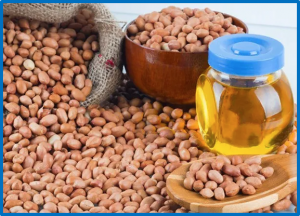
Although increasing the oil content of peanut to meet growing demand has long been a primary aim of breeding programs worldwide, the mining of genetic resources to achieve this objective has obviously lagged behind that of other oil crops. In the present study, we developed an advanced recombinant inbred line population containing 192 F9:11 families derived from parents JH5 and KX01-6. We then constructed a high-resolution genetic map covering 3,706.382 cM, with an average length of 185.32 cM per linkage group, using 2840 polymorphic SNPs.
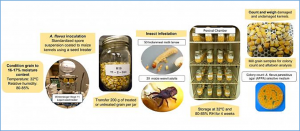
Iowa State University (ISU) Seed Science Center (SSC) reported that farmers who plant Bt corn do not encounter the same concerns with insects and mold like those who plant non-Bt corn. They also discovered more benefits of Bt technology in post-harvest corn storage. Bt corn are insect-protected crops developed through biotechnology. Aside from their resistance to field pests like European corn borer and corn rootworm, researchers have proven that Bt corn was resistant in storage to Indianmeal moth.
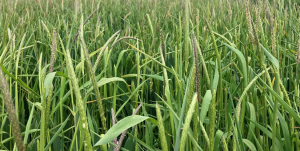
A team led by researchers of the Max Planck Institute for Biology Tübingen and the University of Hohenheim in Stuttgart has found that resistance to herbicides is mostly attributed to genetic variants predating the use of herbicides. In Europe, blackgrass has become the most economically damaging herbicide-resistant weed. Farmers all over Europe face an increasingly difficult battle against blackgrass.
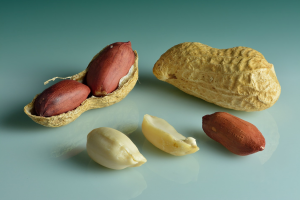
Peanut is a unique legume crop because its pods develop and mature underground. The pegs derive from flowers following pollination, then reach the ground and develop into pods in the soil. Pod number per plant is influenced by peanut growth habit (GH) that has been categorized into four types, including erect, bunch, spreading and prostrate. Restricting pod development at the plant base, as would be the case for peanut plants with upright lateral branches, would decrease pod yield.
Tropic, a pioneering agricultural biotechnology company in the United Kingdom using CRISPR gene editing to improve traits in bananas and coffee, has announced that their non-browning gene-edited banana was technically evaluated and determined to be a non-GMO by the Philippines Department of Agriculture-Bureau of Plant Industry. This banana is the first gene-edited product to go through the Philippines' gene editing regulatory process.