


News & Events
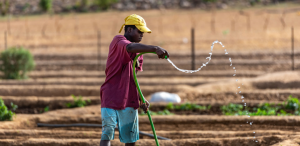
The future of farming belongs to rural youth. In this episode, we explore how to enhance productivity and empower young farmers. We chat with Rahul Antao, IFAD's youth expert, about inspiring young people in agriculture. Mollie Brennan shares insights from the Decent Work for Equitable Livelihoods Coalition. Genna Tesdall, Director of Young Professionals for Agricultural Development, explains food system opportunities for young farmers while Jaron Porciello, Co-Director of Hesat2030, discusses AI's role in food systems.

Amid growing global food insecurity and an intensifying climate crisis, Gerardine Mukeshimana takes up duties today as Vice-President of the UN’s International Fund for Agricultural Development (IFAD). Mukeshimana, a former Rwandan Minister for Agriculture and Animal Resources, was instrumental in leading agricultural growth in Rwanda for almost a decade. “I am thrilled to join IFAD and amplify the global call to invest in small-scale farmers and to keep focus on making global and local food systems more sustainable, resilient and equitable for the people who work in them and feed the world,”
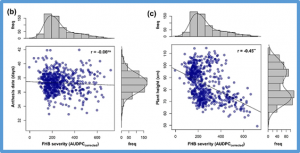
Durum wheat is particularly susceptible to Fusarium head blight (FHB) and breeding for resistance is impeded by the low genetic variation within the elite gene pool. To extend the genetic basis for FHB resistance in durum wheat, we analyzed 603 durum wheat lines from crosses of elite durum wheat with resistance donors carrying resistance alleles derived from Triticum aestivum, T. dicoccum and T. dicoccoides.
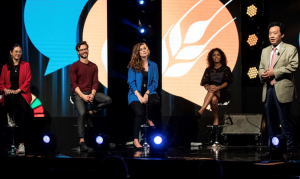
The FAO Youth Committee and the FAO Women’s Committee, established at the beginning of my term of office, help ensure that youth and women act as catalysts, both internally in the Organization by supporting women and youth career enrichment, as well as in supporting Members by generating and gatheringinnovative ideas and approaches to help accelerate agrifood systems transformation and rural development.

The Food and Agriculture Organization of the United Nations (FAO) in partnership with the Government of Japan has launched a four–year project that aims to increase the amount of irrigated land, boost local food production and strengthen the food security and livelihood resilience of more than 12 600 vulnerable people in the Kunar province of eastern Afghanistan.
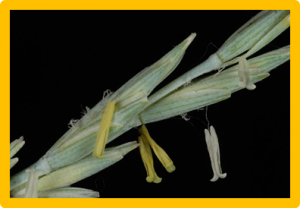
The E genome of Thinopyrum is closely related to the ABD genome of wheat (Triticum aestivum L.) and harbors genes conferring beneficial traits to wheat, including high yield, disease resistance, and unique end-use quality. Species of Thinopyrum vary from diploid (2n = 2x = 14) to decaploid (2n = 10x = 70), and chromosome structural variation and differentiation have arisen during polyploidization.
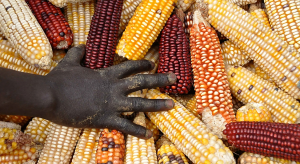
The newly established fund will facilitate financing for developing countries — which are often the most biodiverse — to enhance their ability to protect, restore and ensure the sustainable use of natural resources, as established through The Kunming-Montreal Global Biodiversity Framework adopted by 196 Parties to the Convention on Biological Diversity at COP15 in December 2022.

Researchers from the University of Freiburg, Germany, and partners developed a method called T-CAST to identify and mitigate off-target effects of TALENs. The details of the technique is published in Frontiers in Genome Editing. T-CAST is based on a technique called CAST-Seq, which can be used to sequence all of the DNA in a cell. T-CAST uses CAST-Seq to identify all of the DNA that has been cut by TALENs. It then uses this information to identify off-target sites and to predict the TALEN pairing conformation that led to the off-target cleavage.
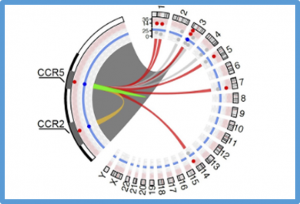
Transcription activator-like effector nucleases (TALENs) are programmable nucleases that have entered the clinical stage. Each subunit of the dimer consists of a DNA-binding domain composed of an array of TALE repeats fused to the catalytically active portion of the FokI endonuclease. Upon DNA-binding of both TALEN arms in close proximity, the FokI domains dimerize and induce a staggered-end DNA double strand break.

Researchers from the University of Minnesota used gene therapy to help treat Hurler syndrome in mice. The results of this study can be used for further research on neurological disorders. Hurler syndrome is a rare genetic brain disorder that affects newborns by causing severe physical abnormalities, cognitive deficiencies, and progressive brain damage. Due to those adverse effects of the disease, the patients experience death at the age of 10 years old.
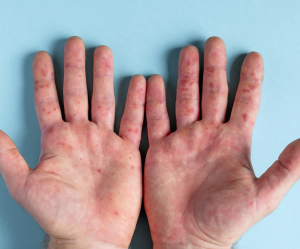
Scientists from Singapore used gene editing to eliminate the virus that causes hand, foot, and mouth disease (HFMD). The study demonstrates gene editing's potential to provide cures for other diseases. Hand, foot, and mouth disease (HFMD) is a typical illness in children that is also experienced by some adults. Its usual symptoms consist of fever, blisters, and rashes. However, it can cause more serious complications like inflammation of the brain (encephalitis) or death
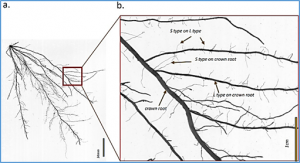
The rice root system consists of two types of lateral roots, indeterminate larger L-types capable of further branching, and determinate, short, unbranched S-types. L-type laterals correspond to the typical lateral roots of cereals whereas S-type laterals are unique to rice. Both types contribute to nutrient and water uptake and genotypic variation for density and length of these laterals could be exploited in rice improvement to enhance adaptations to nutrient and water-limited environments.