


News & Events
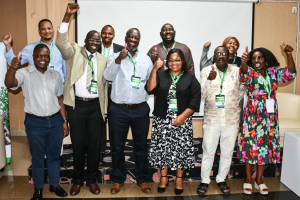
ICRISAT hosted a successful side event titled "A Systems Approach for Building Community Resilience" during the 2024 Biennial Africa Climate Smart Agriculture (CSA) Stakeholders’ Conference in Kigali, Rwanda on 29 July 2024. The event highlighted the crucial role of science in shaping policy agendas and underscored the importance of promoting small-scale mechanization in engaging women and youth in agriculture to bolster community resilience to climate change impacts.
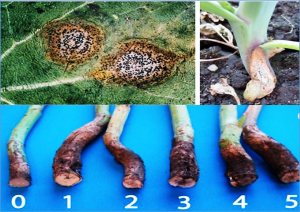
Blackleg (also known as Phoma or stem canker) is a major, worldwide disease of Brassica crop species, notably B. napus (rapeseed, canola), caused by the ascomycete fungus Leptosphaeria maculans. The outbreak and severity of this disease depend on environmental conditions and management practices, as well as a complex interaction between the pathogen and its hosts. Genetic resistance is a major method to control the disease (and the only control method in some parts of the world, such as continental Europe)
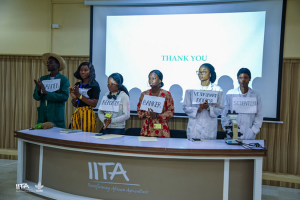
The IITA Communication Office recently organized the 4th edition of the Schools’ Outreach Program at the IITA Headquarters, providing an enriching and educational experience for pupils from four primary schools in Ibadan, Oyo State, Nigeria. The event introduced young minds to vast agricultural, research, and science opportunities.
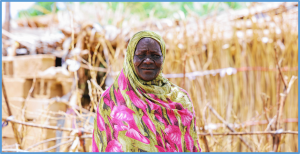
In response to alarming new findings confirming famine conditions in parts of Darfur, the Food and Agriculture Organization of the United Nations (FAO) is urging an immediate cessation of hostilities, rapid scale up of life-saving food, nutrition and cash assistance as well as of the emergency agricultural aid. This is critical in conflict-affected areas to address immediate needs and avert the risk of famine from increasing and affecting other locations across Sudan.
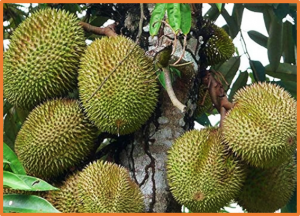
Durian (Durio zibethinus L.) fruit pulp is a rich source of γ-glutamylcysteine (γ-EC), a direct precursor to the antioxidant glutathione (GSH). This study elucidated the in vitro neuroprotective potential of unripe durian fruit pulp extract (UDE) against H2O2-induced neurotoxicity in SH-SY5Y cells and neuroinflammation in lipopolysaccharide (LPS)-stimulated BV-2 cells. Treatments with γ-EC, GSH standards, or UDE exhibited no cytotoxicity in SH-SY5Y and BV-2 cells, except at high concentrations.
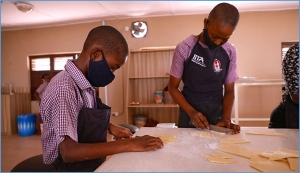
A quiet revolution is happening in the heart of Oyo State, Nigeria, transforming how secondary school students envision their futures. The catalyst for this change is the Start Them Early Program (STEP), a program dedicated to reshaping perceptions of agriculture and agribusiness among young minds. This innovative program’s success is now highlighted in a compelling new study titled “Agribusiness career choice among secondary school students: An assessment of Start Them Early Program in Oyo State, Nigeria.”

FAO Director-General QU Dongyu on Tuesday addressed a High-Level Roundtable on Agrifood Systems Transformation in Lesotho, where he called for immediate critical action amid a steady rise in hunger levels in Africa. Qu addressed the event in Maseru, entitled “Deepening collaboration to accelerate the attainment of Sustainable, Resilient, and Inclusive Food Systems in Lesotho to mitigate future shocks,” on behalf of United Nations agencies working to end hunger and poverty in Lesotho.
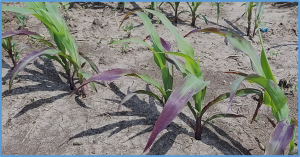
Phosphorus (Pi) is one of the essential nutrients that greatly affect the maize yield. However, the genes underlying the QTL controlling maize low-Pi response remain largely unknown. In this study, a total of 38 traits at both seedling and maturity stages were evaluated under low- and normal-Pi conditions using a RIL population constructed from X178 (tolerant) and 9782 (sensitive), and most traits varied significantly between low- and normal-Pi treatments.
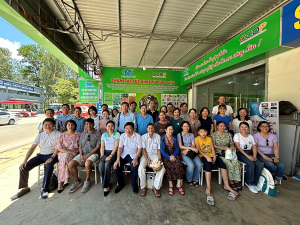
From July 4-6, 2024, over 50 key stakeholders gathered in Vinh City, Viet Nam, for a two-day technical workshop to align Viet Nam’s food systems with its climate goals. The event was co-organized by the Alliance of Bioversity International and CIAT, the International Cooperation Department (ICD) under the Ministry of Agriculture and Rural Development (MARD), and the World Wide Fund for Nature (WWF), with support from the CGIAR Research Initiative on Sustainable Healthy Diets through Food Systems Transformation (SHiFT).
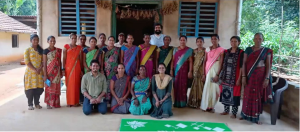
Imagine a world where women beekeepers in remote villages can access real-time advice and support through their mobile phones, using AI-driven apps to manage their hives more effectively. Thanks to recent work by innovators at Women for Bees, this vision is quickly materializing in India. Women for Bees promotes sustainable beekeeping practices, technological innovation, women’s empowerment, and community resilience.
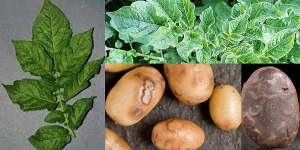
Potato virus A (PVA) is one of the major viruses affecting potato worldwide and can cause serious disease symptoms and yield losses. Previously, we determined that potato cultivar Barbara harbors Rysto (genotype: Ryryryry) and Ra (genotype: Rararara) that each independently confer extreme resistance to PVA. In this study, employing a combination of next-generation sequencing and bulked-segregant analysis, we further located this novel Ra on chromosome 4 using a tetraploid BC1 potato population derived from a Ry-free progeny (Rararararyryryry) of Barbara (RarararaRyryryry) × F58050 (rararararyryryry).
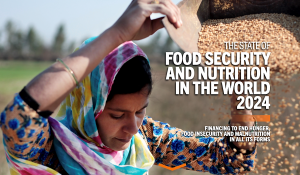
Approximately 733 million individuals faced hunger in 2023, according to the latest State of Food Security and Nutrition in the World report released by the Food and Agriculture Organization and other United Nations agencies. The reported figure is equivalent to one in eleven globally and one in five in Africa faced hunger. The key findings of the report include the following: