


News & Events
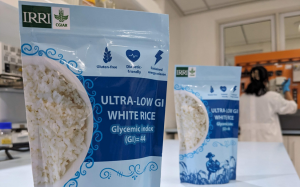
Using genetics and artificial intelligence classification methods, researchers at the International Rice Research Institute (IRRI) and colleagues from the University of California, Davis (the United States of America), the Max Planck Institute of Molecular Plant Physiology (Germany), and the Center of Plant Systems Biology (Bulgaria) have identified genes and markers responsible for low glycemic index (GI) and high protein content in rice.
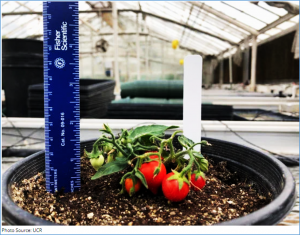
Researchers at the University of California Riverside genetically altered tomato plants to grow in ideal size for planting in space. With this study, astronauts might be able to plant tomatoes and eat freshly picked fruits at the International Space Station. "It's expensive to send food up to astronauts, so ideally, we want them to grow some of their own food," said Robert Jinkerson, an associate professor of chemical and environmental engineering at the Bourns College of Engineering at UC Riverside.

Plants are sensitive to photoperiods and are also equipped with systems to adjust their flowering time in response to various changes in the environment and developmental hormones. In the present study, previously generated rice OsWOX13 overexpression (OsWOX13-ov) and newly generated OsWOX13 knockout (oswox13-ko) lines constructed via Cas9-CRISPR technology flowered 10 days earlier and 4 to 6 days later than the WT, respectively.

Researchers from the Federal University of Technology Akure and partners reviewed how genetic engineering and gene editing can help contribute to food security in Africa. Various African countries cannot meet the food demands of their population, and this is worsened by disease outbreaks and climate change. Biotechnology tools, such as genetic engineering and gene editing, will be helpful in boosting crop production to feed the African population.
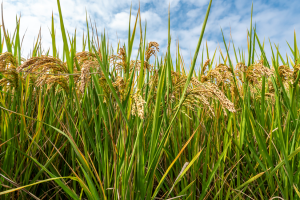
Myongji University scientist Yeon-Ki Kim reported the successful knockout of a rice gene that leads to delayed flowering under natural long-day conditions. The findings of the study, published in Bioscience, Biotechnology & Biochemistry, could help breeders develop rice cultivars with improved yield and resilience to drought. Plants have complex mechanisms to adjust their flowering time, depending on the environmental conditions and other internal signals.
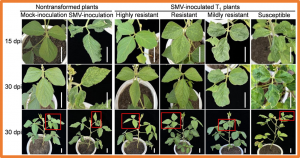
Soybean mosaic virus (SMV), an RNA virus, is the most common and destructive pathogenic virus in soybean fields. The newly developed CRISPR/Cas immune system has provided a novel strategy for improving plant resistance to viruses; hence, this study aimed to engineer SMV resistance in soybean using this system. Specifically, multiple sgRNAs were designed to target positive- and/or negative-sense strands of the SMV HC-Pro gene.

Experts from Nanjing Agricultural University and partners used CRISPR to develop soybeans with enhanced resistance to soybean mosaic virus (SMV). Their study, published in The Crop Journal, contributes to the ongoing research efforts to manage viral diseases in soybeans. SMV is a virus causing significant threats to the yield and seed production quality of soybeans. It is the most widespread virus in soybean cropping regions, leading to reduced grain yields by as much as 15% to 35% under natural field conditions.

The first gene-edited wheat and barley crop trials in Europe will be held on conventional farms, and will soon be underway in up to 25 farms in the United Kingdom. The trials, also called PROBITY (Platform to Rate Organisms Bred for Improved Traits and Yield) are being organized by the British on-Farm Innovation Network (BOFIN) along with partner organizations including Rothamsted Research, the John Innes Centre, the University of Nottingham, and Aberystwyth University.

In this study, an elite diversity panel of 348 upland cotton accessions was evaluated in 10 environments across the US Cotton Belt and genotyped with the cottonSNP63K array, for a genome-wide association study of six fiber quality traits. All fiber quality traits, upper half mean length (UHML: mm), fiber strength (FS: g tex−1), fiber uniformity (FU: %), fiber elongation (FE: %), micronaire (MIC) and short fiber content (SFC: %), showed high broad-sense heritability (> 60%).
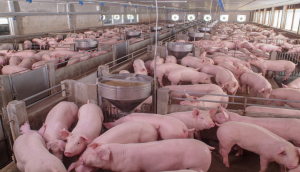
A study conducted by researchers from China shows promising results in developing transgenic pigs with acquired resistance against the devastating effects of the Asian Swine Fever (ASF) virus. Their study, published in Microbiology Spectrum, is the first to engineer a living organism to assess resistance to ASF infection through the CRISPR-Cas system.

Researchers from Shanghai Jiao Tong University have successfully assembled the first chromosome-level, haplotype-resolved genome of the Chinese cherry cultivar "Zhuji Duanbing." The findings of the study provide important insights into the genetic determinants of fruit firmness, offering a valuable resource for breeding programs of Chinese cherry.

This review delves into the multifaceted technologies, benefits and considerations surrounding the expression of animal proteins in plants, emphasizing its potential role in advancing global nutrition, enhancing sustainability, while being mindful of the safety considerations. As the world’s population continues to grow and is projected to reach 9 billion people by 2050, there is a growing need for alternative protein sources that can meet nutritional demands while minimizing environmental impact.