


Calcium signaling in crops
Chunxia Zhang, Yang Song, Jörg Kudla
New Phytol.; 2026 Feb; 249(4):1644-1658. doi: 10.1111/nph.70796.
Abstract
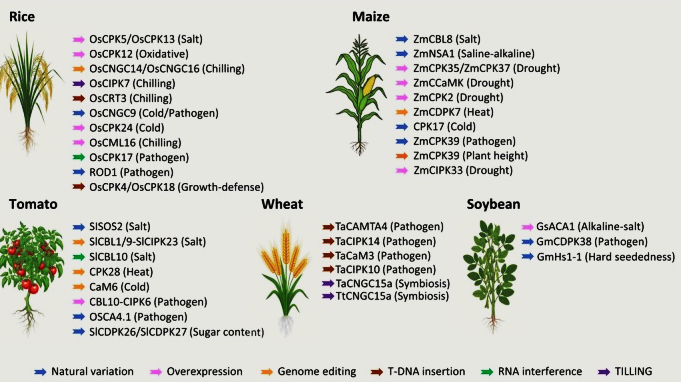
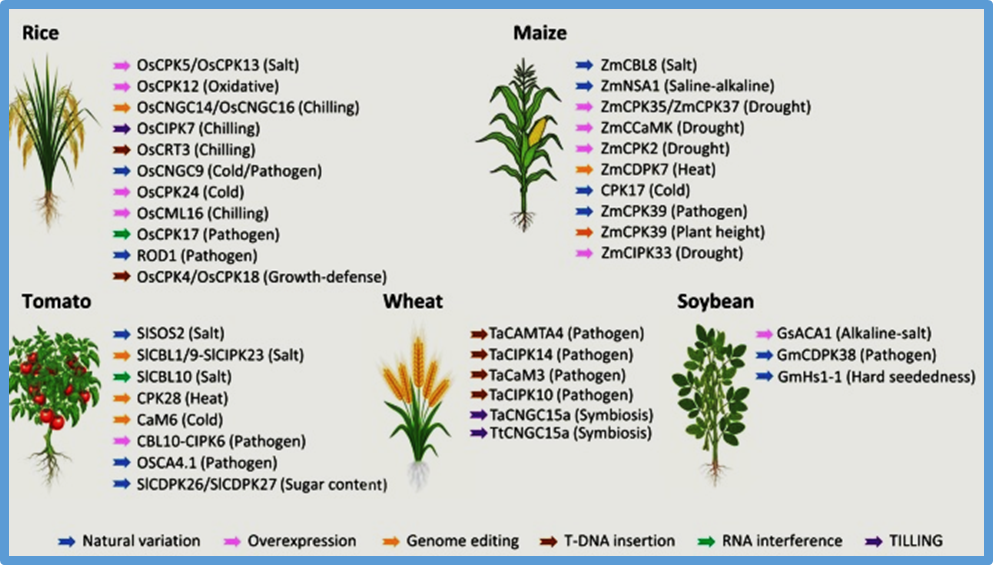
Calcium (Ca2+) signaling is integral to nearly all aspects of plant biology, including development and responses to biotic and abiotic stresses. It operates through two main layers: the generation of Ca2+ signals and their decoding by Ca2+-binding proteins, which act early in diverse signaling pathways. The system exhibits remarkable robustness and versatility, largely due to its network-like organization. While fundamental principles of Ca2+ signaling were initially established in noncrop model organisms, recent research has increasingly expanded toward major crop species and has demonstrated that natural and synthetically created variation in Ca2+ signaling components can shape agronomically important traits. In this review, we first provide a concise overview of the fundamental principles of plant Ca2+ signaling and then synthesize the current status of this research field in major crop plants. We discuss why exploiting existing natural and engineering synthetic genetic diversity in Ca2+ signaling components offers promising strategies to enhance crop stress resilience and yield stability. Subsequently, we delineate how - aided by artificial intelligence - superior alleles can be identified and/or created and incorporated into elite crop genomes. Finally, we discuss current challenges and emerging perspectives in translating Ca2+ signaling research into practical applications for crop improvement.
See https://pubmed.ncbi.nlm.nih.gov/41367079/
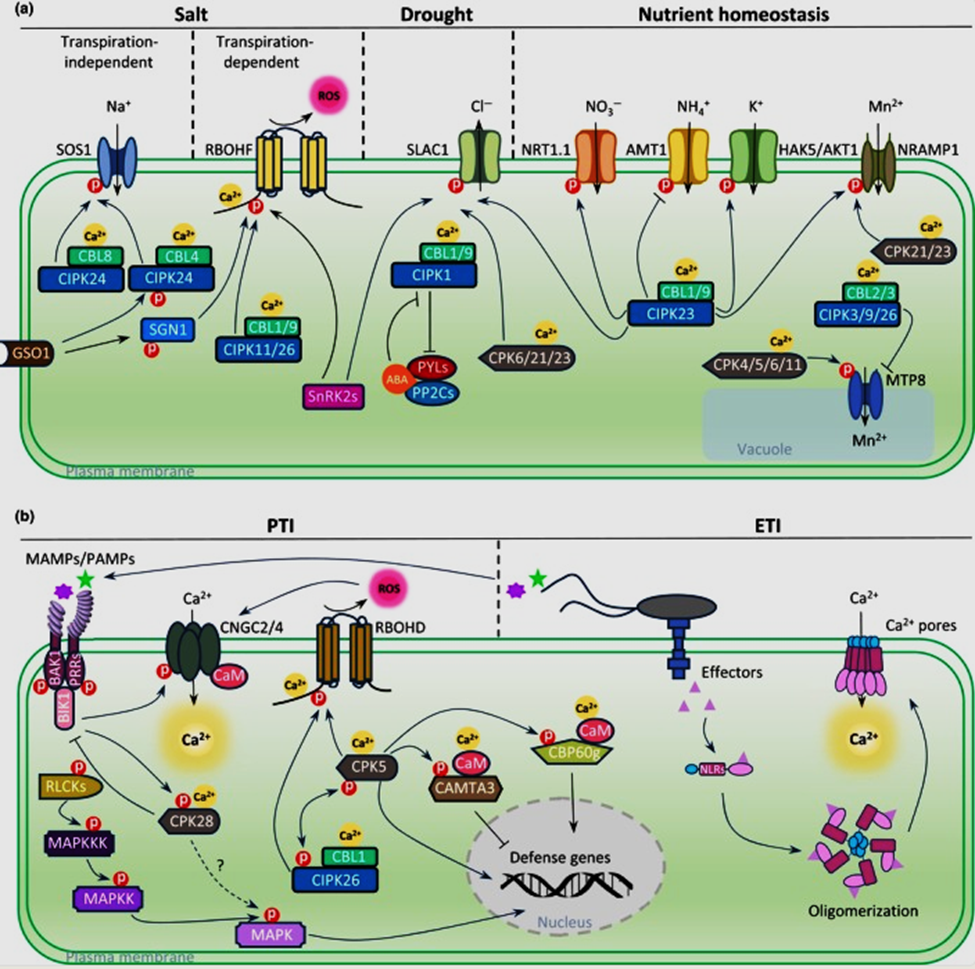
Figure 1: Functions of Ca2+ signaling in stress responses in Arabidopsis. (a) Schematic illustration of Ca2+ signaling involved in responses to salt, drought stresses, and nutrient homeostasis. (b) Ca2+ signaling in pathogen‐associated molecular pattern (PAMP)‐triggered immunity (PTI) and effector‐triggered immunity (ETI). Further details are provided in the main text.
Views: 298