


Black pepper knowledge base (BlackPepKB): a centralized web resource for functional genomics of black pepper (Piper nigrum L.)
L M D Bawanga, D R R Wijewardene, Praveena Sarathchandra, S Viswakula, Anushka M Wickramasuriya
BMC Genomics; 2025 Oct 17; 26(1):929. doi: 10.1186/s12864-025-12134-3.
Abstract
Background: Black pepper (Piper nigrum L.) is a highly valued spice crop with significant economic, medicinal, and cultural importance. While genomic and transcriptomic data for black pepper have rapidly accumulated in recent years, there is currently no dedicated genomic database to serve as a centralized web resource for the research and breeding community. Furthermore, despite the availability of a reference genome, the functional annotation of its proteome and a comprehensive repertoire of its transcription factors (TFs) remain incomplete.
Results: We identified a total of 2,503 TF-encoding genes in black pepper (PnTFs), classified into 62 TF families. Notably, 471 intronless PnTF genes were identified, with more than 50% of genes in families such as Dof, ERF, GeBP, GRAS, NF-YB, RAV, TCP, Trihelix, and ZF-HD, suggesting their potential roles in regulating stress responses. Protein-protein interaction network analysis identified 171 hub PnTFs that may serve as key regulators in diverse biological processes. In addition, Gene Ontology-based functional annotation of 63,463 proteins in black pepper revealed that 35,670 (56.2%) were annotated with at least one GO term. To support continued research and data exploration, we developed Black Pepper Knowledge Base (BlackPepKB), a user-friendly, integrative genomic platform for black pepper. BlackPepKB hosts genomic, transcriptomic, and functional annotation data, and incorporates interactive tools to enhance data accessibility. Key features include an electronic Fluorescent Pictograph (eFP) browser for visualizing gene expression patterns across tissues and developmental stages, JBrowse2 for genome navigation, BLAST for sequence similarity searches, and GeneViz for exon-intron gene structure visualization. Additionally, PepperExp and PepperClust tools enable heatmap generation and hierarchical clustering of gene expression data, while GO-Pep facilitates the retrieval of GO terms. The platform also offers user-friendly interfaces for querying single nucleotide polymorphisms and exploring TF families in black pepper.
Conclusion: BlackPepKB serves as the first dedicated genomic database for black pepper, providing a comprehensive and accessible platform for functional genomics research. This work lays a solid foundation for advancing genetic research and molecular breeding in black pepper. BlackPepKB is publicly accessible at: https://black-pepper-genomic-resource.vercel.app/ .
See https://pubmed.ncbi.nlm.nih.gov/41107735/
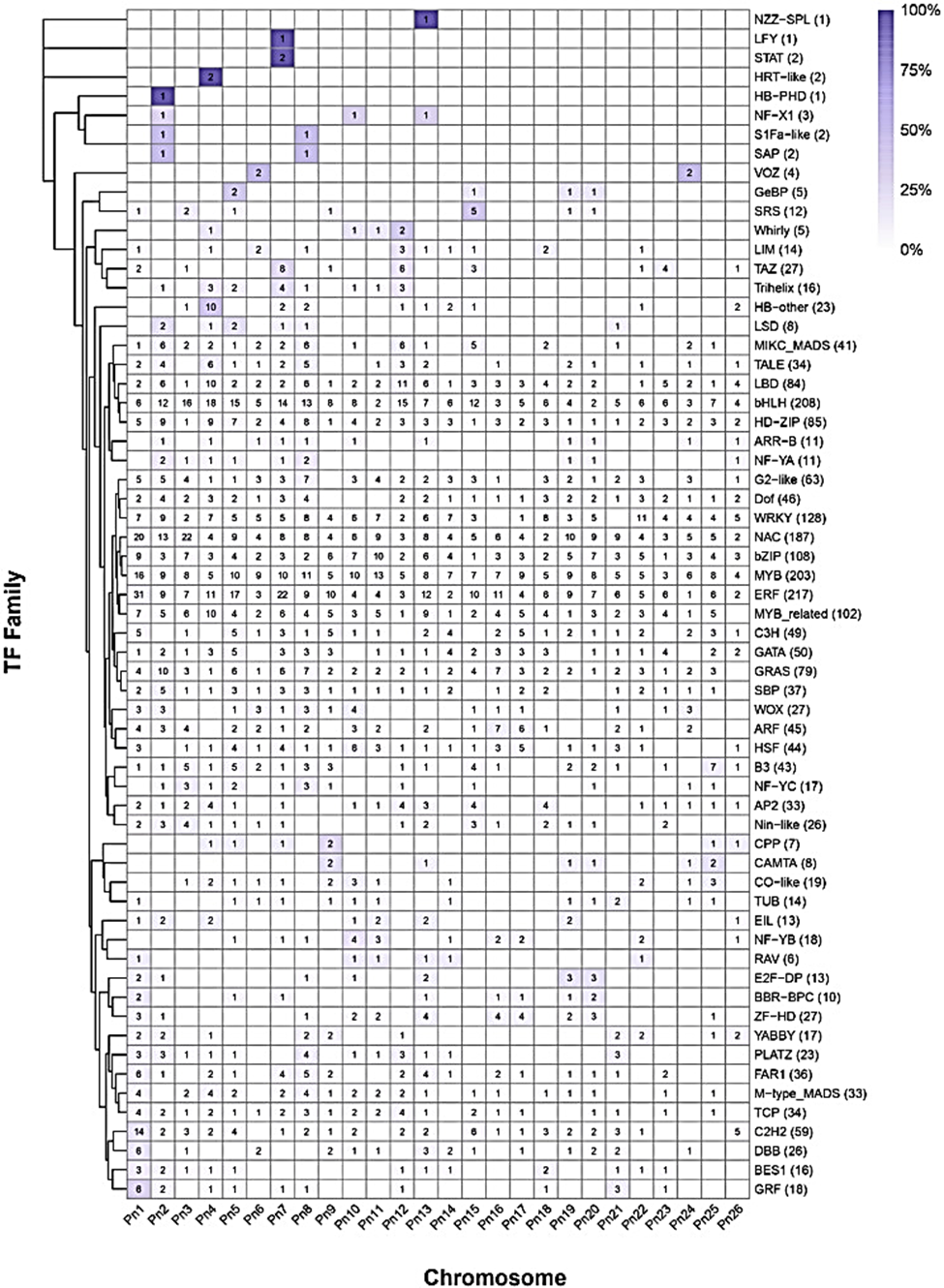
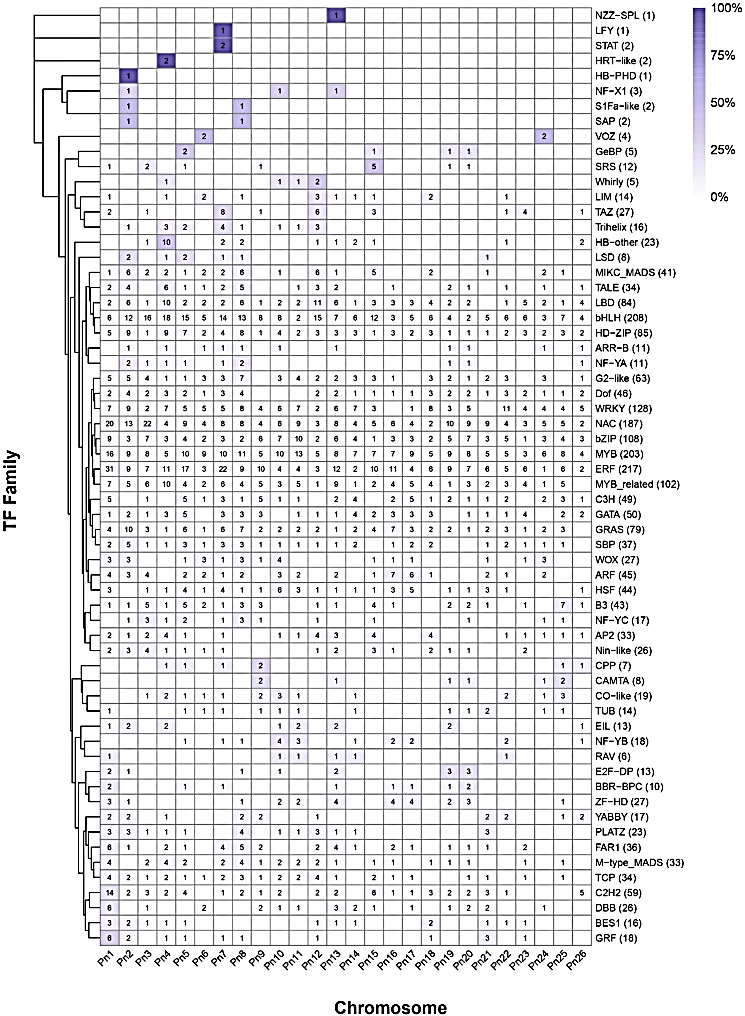 Figure 2
Chromosomal distribution of PnTF families. The heatmap shows the distribution of PnTF-encoding genes across chromosomes, with each cell indicating the number of genes for a specific TF family on that chromosome. The color intensity in each cell provides a visual representation of the gene density for each TF family across different chromosomes
Views: 483