


News & Events
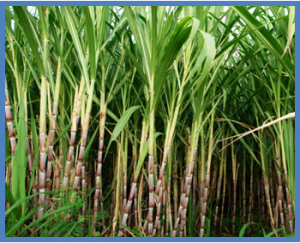
Fulmekiola serrata (Kobus) was observed infesting sugarcane, Saccharum spp. hybrids, in the United States for the first time in January 2017 in Florida. Field studies were conducted to determine F. serrata infestation levels on popular sugarcane cultivars and to determine the efficacy of foliar insecticide treatments that could be used for management. Cultivar evaluations comparing six and five commercial cultivars representing >46% of the sugarcane production area in Florida were conducted in 2017 and 2018, respectively.
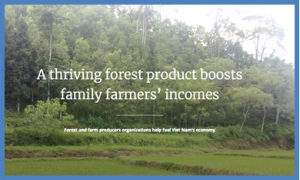
In the northern regions of Viet Nam, forestry and agriculture provide livelihoods for nearly 80 percent of the population. However, nearly half of all households own less than one hectare of land, which often prevents farmers from earning the income they need. To help smallholder farmers find ways to raise their incomes – while sustainably using forest resources – the Forest and Farm Facility (FFF) partnered with the Viet Nam National Farmers’ Union (VNFU) to support farming families in forming life-changing cooperatives.
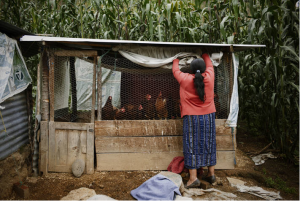
FAO and the Community of Portuguese Language Countries (CPLP) have joined forces to boost food and nutrition security in their territories through strengthened sustainable family farming and agroecology development. FAO Director-General José Graziano da Silva today announced a $400 000 cooperation programme which kicks-off with the creation of a new training centre headquarted in São Tomé and Príncipe to facilitate knowledge exchange and capacity building for technicians,
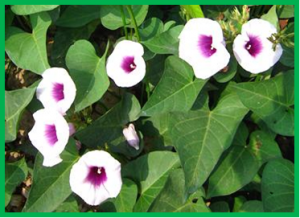
CCCH-type zinc-finger proteins play essential roles in regulating plant development and stress responses. However, the molecular and functional properties of non-tandem CCCH-type zinc-finger (non-TZF) proteins have been rarely characterized in plants. Here, we report the biological and molecular characterization of a sweet potato non-TZF gene, IbC3H18. We show that IbC3H18 exhibits tissue- and abiotic stress-specific expression, and could be effectively induced by abiotic stresses, including NaCl,
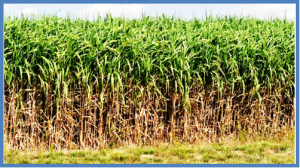
Large proportions of crops are discarded during or after harvest, including plant parts containing proteins, fats, and fiber. Professor Luisa Trindade, professor at the Department of Plant Sciences at Wageningen University and Research (WUR) said this has to change. "The world needs plants that can be used fully, to the last molecule," she said.
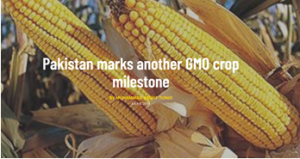
At a recent CropLife Pakistan Association event, local farmers expressed their support for GM crops as the performance of GM maize hybrids in the field was displayed. They demonstrated their sentiments about biotechnology, particularly how it helped improve their profitability through reduced input cost and improved yields.
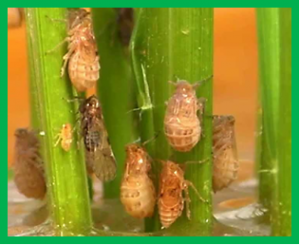
Brown plant hopper (BPH) is one of the major destructive insect pests of rice, causing severe yield loss. Thirty-two BPH resistance genes have been identified in cultivated and wild species of rice Although, molecular mechanism of rice plant resistance against BPH studied through map-based cloning, due to non-existence of NMR/crystal structures of Bph14 protein, recognition of leucine-rich repeat (LRR) domain and its interaction with different ligands are poorly understood

The United States Department of Agriculture-Animal and Plant Health Inspection Service (USDA-APHIS) is looking into the discovery of genetically engineered (GE) wheat in an unfarmed agricultural field in Washington, USA. Upon thorough investigation, the USDA determined that the GE wheat were glyphosate resistant and developed by Bayer CropScience (previously Monsanto). The varieties detected were MON 71300 and MON 71800.
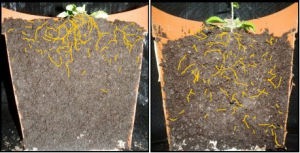
Underground networks of roots forage for nutrients and water for plants sustenance. Yet, the genetic and molecular mechanisms that govern which parts of the soil roots explore remain largely unknown. In a breakthrough that will help reduce atmospheric carbon from plants, researchers from Salk Institute have discovered a gene that determines the depth of root growth in the soil.
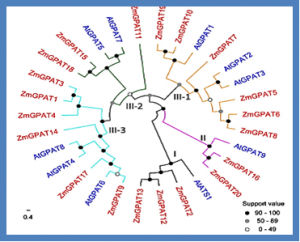
Glycerol-3-phosphate acyltransferase (GPAT) mediates the initial step of glycerolipid biosynthesis and plays pivotal roles in plant growth and development. Compared with GPATgenes in Arabidopsis, our understanding to maize GPAT gene family is very limited. Recently, ZmMs33 gene has been identified to encode a sn-2 GPAT protein and control maize male fertility in our laboratory (Xie et al. in Theor Appl Genet 131:1363–1378, 2018). However, the functional mechanism of ZmMs33 remains elusive.
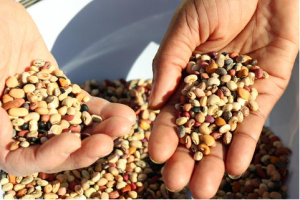
Scientists from the University of Callifornia Riverside (UC Riverside) have decoded the genome of black-eyed peas, a legume also known as cowpea. This is the first high-quality reference genome for cowpea. Cowpeas are small beans with dark midsections and is a global dietary staple for centuries due to their environmental toughness and exceptional nutritional qualities, such as high protein and low fat. It is the top source of protein in the human diet in sub-Saharan Africa