


News & Events
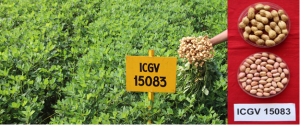
After eight years of collaborative work, two high oleic groundnut lines have been identified by India’s coordinated release program to go commercial. This means processors and consumers in India will now have access to heathier groundnut-based food products and oil with longer shelf life.
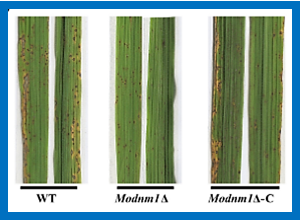
Magnaporthe oryzae causes blast disease, which is one of the most devastating infections in rice and several important cereal crops. Magnaporthe oryzae needs to coordinate gene regulation, morphological changes, nutrient acquisition and host evasion in order to invade and proliferate within the plant tissues. Thus far, the molecular mechanisms underlying the regulation of invasive growth in planta have remained largely unknown.
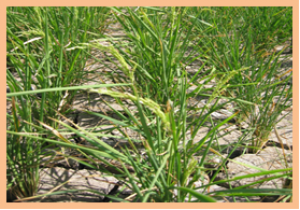
Drought is one of the abiotic factors that affect the yield of crops. Studies have shown that basic leucine zipper motif (bZIP) transcription factors play an important regulatory function in plant drought stress responses. However, the functions of bZIP transcription factors in rice are still mysterious. Scientists from Shanghai Agrobiological Gene Center identified and characterized a novel drought stress-related bZIP transcription factor in rice—OsbZIP62. The findings are published in BMC Plant Biology.

The Federal Office for the Environment (FOEN) of Switzerland has given permission to the University of Zurich to conduct field trials of genetically modified (GM) barley under strict conditions on June 12, 2019.The FOEN approved the application and set out the measures that the university had to take to prevent GM material from spreading outside the experimental area
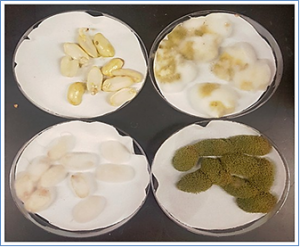
Biocontrol of the mycotoxin aflatoxin utilizes non-aflatoxigenic strains of Aspergillus flavus, which have variable success rates as biocontrol agents. One non-aflatoxigenic strain, NRRL 35739, is a notably poor biocontrol agent. Its growth in artificial cultures and on peanut kernels was found to be slower than that of two aflatoxigenic strains, and NRRL 35739 exhibited less sporulation when grown on peanuts. The non-aflatoxigenic strain did not greatly prevent aflatoxin accumulation
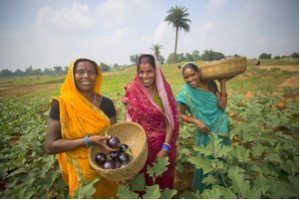
Bt eggplant or brinjal (Solanum melongena) as it is more commonly known in Bangladesh, has revived the country's eggplant industry by increasing fruit yield and reducing insecticide use, according to a study led by scientists from Cornell University and the Bangladesh Agricultural Research Institute (BARI).
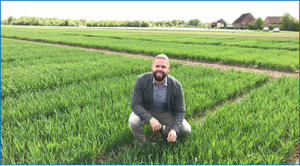
New research at The University of Queensland (UQ) debunks the myth that modern wheat varieties are heavily reliant on pesticides and fertilizers. According to Dr. Kai Voss-Fels of UQ's Queensland Alliance for Agriculture and Food Innovation (QAAFI), modern wheat varieties have out-performed older varieties in adjacent field trials under both optimum and harsh growing conditions.
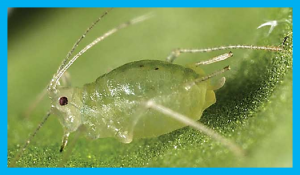
Transmission of plant viruses by aphids involves multitrophic interactions among host plants, aphid vectors, and plant viruses. Here, we used small RNA (sRNA) sequencing to visualize the sRNA response of Myzus persicae to two plant viruses that M. persicae transmits in different modes: the nonpersistent Potato virus Y (PVY) versus the persistent Potato leafroll virus (PLRV)
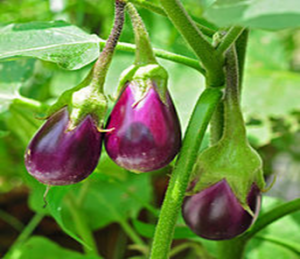
Around 1,500 farmers gathered in a field in Maharashtra to plant Bt brinjal and herbicide tolerant cotton seeds, which are not approved for planting in India. They planted the seeds because they believe that the seeds could improve their livelihoods and help decrease pesticide use in the farms. Bt brinjal has been planted by thousands of farmers in Bangladesh, where it is approved for planting since 2013.
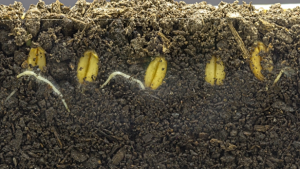
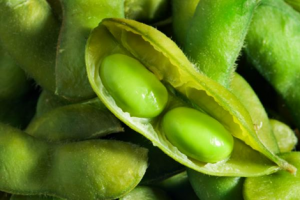
Flood has an important effect on plant growth by affecting their physiologic and biochemical properties. Soybean is one of the main cultivated crops in the world and the United States is one of the largest soybean producers. However, soybean plant is sensitive to flood stress that may cause slow growth, low yield, small crop production and result in significant economic loss. Therefore, it is critical to develop soybean cultivars that are tolerant to flood.
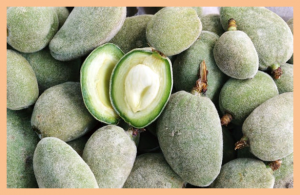
An international team of researchers from Spain, Switzerland, Denmark, and Italy has sequenced the first complete almond genome. The sequence represents almost 95 percent of the genes, or nearly 28,000 genes and roughly 246 million base pairs. The sequencing project sought to find the genetic differences between bitter and sweet almonds.