


News & Events

At a recent CropLife Pakistan Association event, local farmers expressed their support for GM crops as the performance of GM maize hybrids in the field was displayed. They demonstrated their sentiments about biotechnology, particularly how it helped improve their profitability through reduced input cost and improved yields.
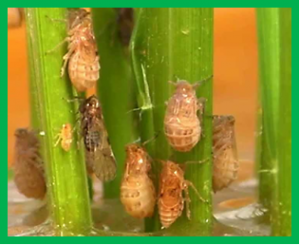
Brown plant hopper (BPH) is one of the major destructive insect pests of rice, causing severe yield loss. Thirty-two BPH resistance genes have been identified in cultivated and wild species of rice Although, molecular mechanism of rice plant resistance against BPH studied through map-based cloning, due to non-existence of NMR/crystal structures of Bph14 protein, recognition of leucine-rich repeat (LRR) domain and its interaction with different ligands are poorly understood

The United States Department of Agriculture-Animal and Plant Health Inspection Service (USDA-APHIS) is looking into the discovery of genetically engineered (GE) wheat in an unfarmed agricultural field in Washington, USA. Upon thorough investigation, the USDA determined that the GE wheat were glyphosate resistant and developed by Bayer CropScience (previously Monsanto). The varieties detected were MON 71300 and MON 71800.
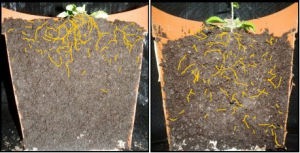
Underground networks of roots forage for nutrients and water for plants sustenance. Yet, the genetic and molecular mechanisms that govern which parts of the soil roots explore remain largely unknown. In a breakthrough that will help reduce atmospheric carbon from plants, researchers from Salk Institute have discovered a gene that determines the depth of root growth in the soil.
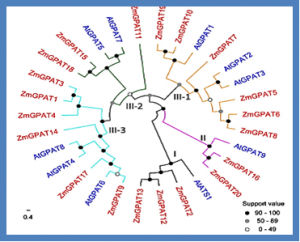
Glycerol-3-phosphate acyltransferase (GPAT) mediates the initial step of glycerolipid biosynthesis and plays pivotal roles in plant growth and development. Compared with GPATgenes in Arabidopsis, our understanding to maize GPAT gene family is very limited. Recently, ZmMs33 gene has been identified to encode a sn-2 GPAT protein and control maize male fertility in our laboratory (Xie et al. in Theor Appl Genet 131:1363–1378, 2018). However, the functional mechanism of ZmMs33 remains elusive.
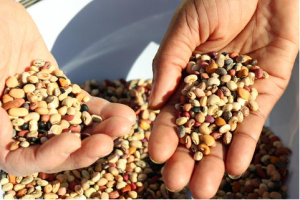
Scientists from the University of Callifornia Riverside (UC Riverside) have decoded the genome of black-eyed peas, a legume also known as cowpea. This is the first high-quality reference genome for cowpea. Cowpeas are small beans with dark midsections and is a global dietary staple for centuries due to their environmental toughness and exceptional nutritional qualities, such as high protein and low fat. It is the top source of protein in the human diet in sub-Saharan Africa

The market for biologically-derived proteins is said to reach US$300 billion in the future. Currently, industrial enzymes and other proteins are made in large, expensive fermenting reactors, but using plants to produce them could reduce production costs by three times. Researchers at Cornell University and the University of Illinois have engineered plants which can produce proteins not native to the plant itself. The research team genetically modified tobacco plants to produce the cellulase protein Cel6A, an enzyme.


Over 60 spokespersons from various government ministries, departments and agencies (MDAs) were excited by the scale of progress made in agricultural research in Uganda. The spokespersons attended an engagement organized by National Agricultural Research Organization (NARO) through its information-sharing hub, the Uganda Biosciences Information Center (UBIC), at the National Crops Resources Research Institute (NaCRRI) at Namulonge on July 10, 2019.

The National Biosafety Authority (NBA) of Zambia released permits to four companies to import products that may contain genetically modified crops. According to NBA Chairperson, Dr. Paul Zambezi, the permits were granted to Gatbro Distributors, Pick n Pay, Southern National Import and Export Limited and Choppies Super Stores market, following the decision of the Board on July 5, 2019 in Lusaka.
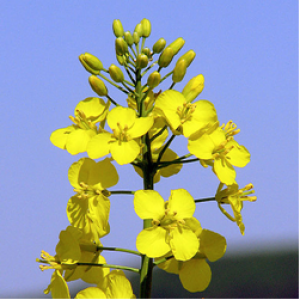
The INDEHISCENT (IND) and ALCATRAZ (ALC) gene homologues have been reported to be essential for dehiscence of fruits in Brassica species. But their functions for pod shatter resistance in Brassica napus, an important oil crops, are not well understood. Here, we assessed the functions of these two genes in rapeseed using CRISPR/Cas9 technology. The induced mutations were stably transmitted to successive generations, and a variety of homozygous mutants with loss-of-function alleles of the target genes were obtained for phenotyping

Modern biotechnology (transgenesis and gene editing) helps achieve an increase in food production without the need for more land area for agriculture. It is expected to continue contributing to achieving global food production and thus it is necessary for this technology to be widely accepted. For this reason, experts from DowDuPont published a review on how government regulations of gene-edited crops and public acceptance of these crops are affect each other.