Scientific news
Wednesday, 20-08-2025 | 08:45
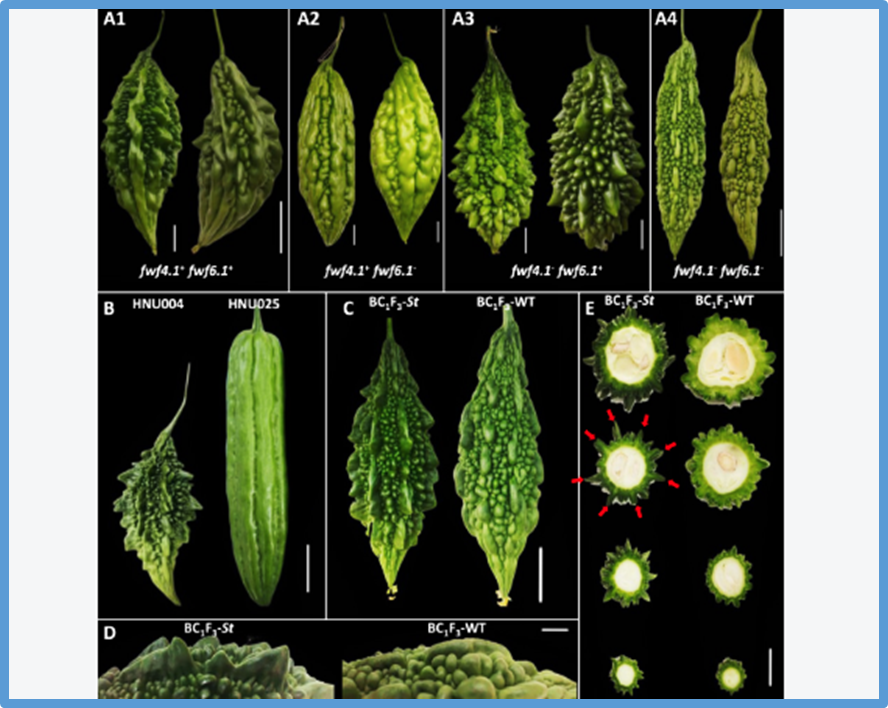
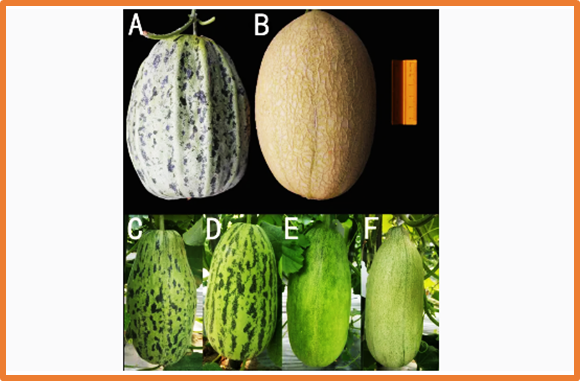
The wrinkled rind (wr) phenotypic trait in melon is rare, and the regulatory mechanisms and genes governing this feature remain unclear. In this study, genetic analysis of a segregating F2 population derived from the wrinkled rind melon line T16-085 and the smooth rind line T15-022 suggested that the wr trait is controlled by a single recessive gene, designated Cmwr. Scanning electron microscopy suggested that rind wrinkling is caused by the uneven aggregation of rind cells. Bulked segregant analysis (BSA) delimited the candidate region to approximately 1.90 Mb on chromosome 2, genetic linkage analysis refined this locus to a 448.24-kb region, and fine mapping of data from 1140 F2 individuals restricted it to a 72.24-kb region containing eight candidate genes.