


University of Missouri Discovers Protein that Regulates Root Growth
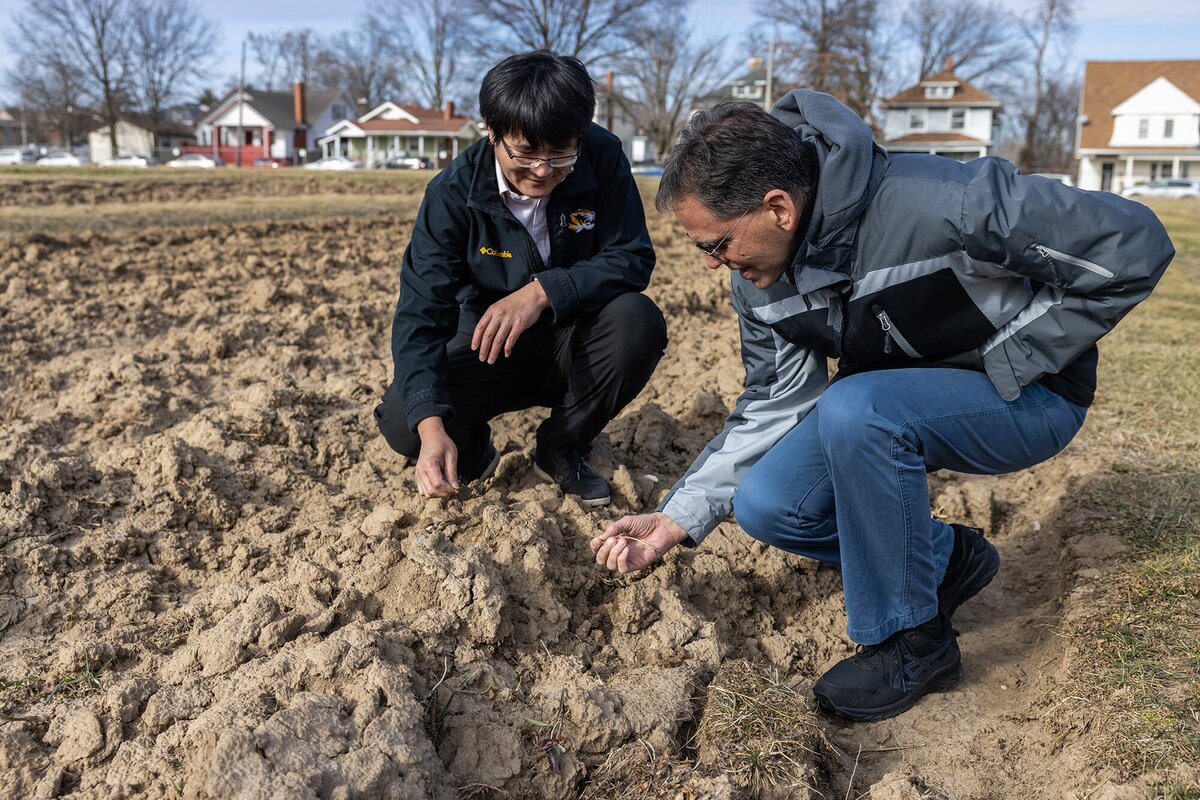
Figure: Jianbin Su and Walter Gassmann collaborate to study the specific role of SRFR1 protein plays in plants
March 4, 2026
Scientists at the University of Missouri have identified a key protein, SRFR1, that controls root length in plants, using artificial intelligence (AI) and genetic modification to uncover and enhance its function. The findings of the study, published in The Plant Cell, could help develop crop varieties that are better suited to drought conditions.
The researchers found that SRFR1 forms tiny gel-like structures, known as condensates, that naturally help control the root growth of plants. Using AI tools, the team identified specific amino acids responsible for forming bonds between SRFS1 molecules. The team then genetically modified these amino acids to enhance the protein's ability to form condensates, resulting in plants with significantly longer roots than wild-type plants.
Microscopy confirmed that the GM plants formed more condensates in root cells. The findings suggest that enhancing SRFR1 could help scientists develop crops with root systems better adapted to drought stress. “In times of drought, plants need longer roots to reach deeper into the soil in search of water or nutrients. Now that we have learned what this protein does, we can manipulate it to help plants thrive in various environments,” said Walter Gassmann, Director of the Bond Life Sciences Center and Professor in the College of Agriculture, Food, and Natural Resources.
For more information, read the article from the University of Missouri.
See https://www.isaaa.org/kc/cropbiotechupdate/article/default.asp?ID=21717
Views: 101