


FAO in review: A year of resilience in resource mobilization
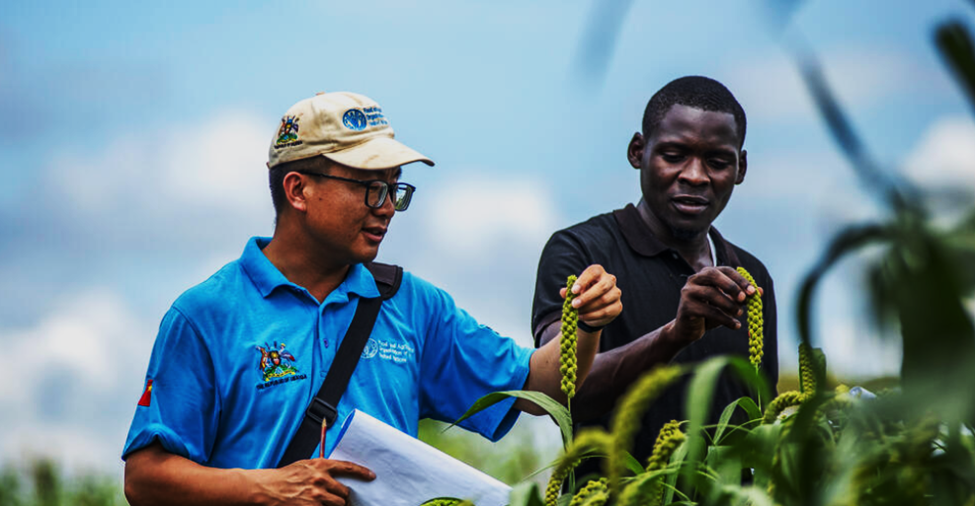
Figure: A Chinese expert on new crops variety development, speaks to a worker who operates the sorghum plantation in the China-Uganda Agricultural Cooperation Industrial Park (CUACIP).© FAO/Stuart Tibaweswa
FAO News; 23 Dec 2025
External fiscal pressures and shifting global priorities have significantly impacted the availability of global resources for public investment. However, amidst these challenging circumstances, FAO has demonstrated remarkable resilience and effectiveness, successfully mobilizing approximately $1.624 billion in voluntary contributions in 2025. While this figure reflects an eight percent decline from 2024, it still ranks among the strongest results in FAO’s history.
Vertical funds, such as the Green Climate Fund (GCF), the Global Environment Facility (GEF), and the Pandemic Fund (PF) remain FAO’s primary resource partners, accounting for 45 percent of all mobilized resources.
Notably, 2025 marks a record year for the FAO-GCF partnership, with the largest sum ever approved for FAO-led GCF climate projects in a single year – totaling over $400 million, particularly benefiting Small Island Developing States (SIDS), Least Developed Countries (LDCs), and Landlocked Developing Countries (LLDCs). With FAO's support, these nations have successfully accessed and channeled increased financing for sustainable and resilient agrifood systems and for building resilience against the impacts of the climate crisis.
Through the FAO-GEF partnership, approximately $300 million has been facilitated to support the design and implementation of National Adaptation Plans, while also building the necessary capacity and institutional frameworks for future investments.
This success can be attributed to FAO’s increasing provision of technical and operational assistance to its Members, helping them mobilize resources for their development needs. By leveraging the expanding scale and scope of vertical funds and international financial institutions, FAO has fostered a process of recipient-led funding and financing.
This approach is particularly crucial for countries progressing to middle-income status, which often find themselves ineligible for traditional grant mechanisms, except for short-term humanitarian interventions.
See https://www.fao.org/director-general/news/2025/resilience-resource-mobilization/en
Views: 106