


Engineering the plant microbiome: synthetic community approaches to enhance crop protection
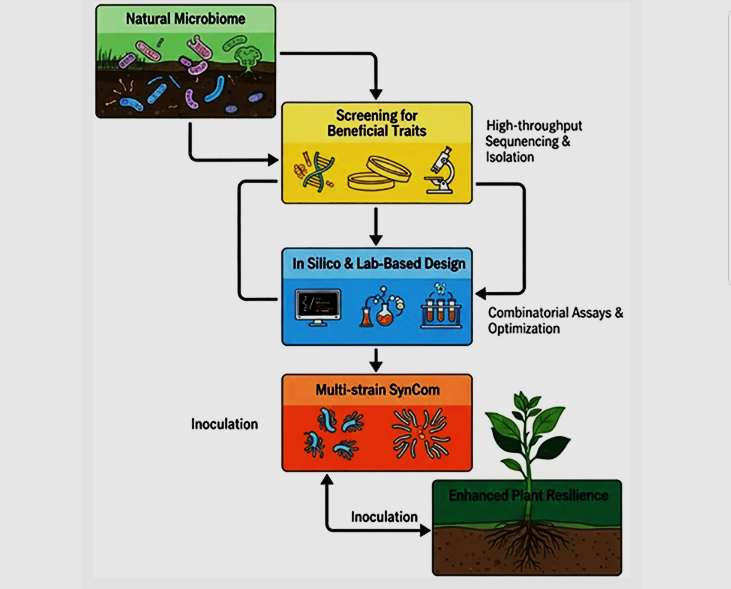
Figure: Workflow for SynCom design and implementation
The plant microbiome is essential for plant health; in particular, synthetic microbial communities (SynComs) offer a scalable, sustainable alternative to chemical pesticides. The concept has moved beyond single-strain inoculants, with SynComs being rationally designed using ecological principles, computational tools, and an understanding of how plants shape their microbial niche through root exudates and chemotaxis. Indeed, effective SynCom design requires a mechanistic understanding of microbe-microbe and host-microbe interactions. In real field settings, SynComs have been shown to suppress diseases in tomato, rice, wheat, and maize while enhancing yield. Inconsistent field performance, instability in formulation, regulatory challenges, and farmer adoption are among the pressing issues related to SynComs. In the foreseeable future, the integration of machine learning and gene-editing tools is expected to enable SynCom formulation with greater precision and impact. Favorable labor division and mutualistic relationships within a SynCom make it a more controlled and ecologically informed tool for modern agriculture.
Views: 433