


Engineered pattern recognition receptors enhance broad-spectrum plant resistance
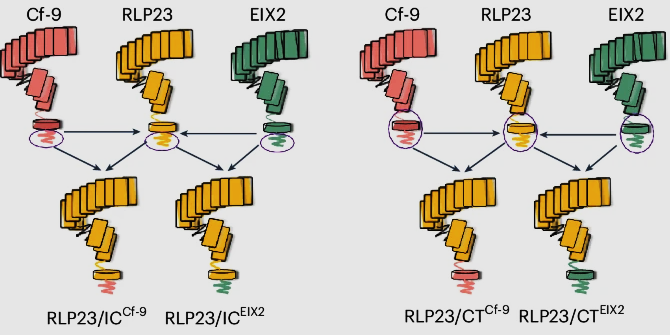
Figure: Schematic representation of RLP23, Cf-9 and EIX2, along with their chimeric variants featuring reciprocal IC or CT domain swaps
Nature Biotechnology; 13 October 2025
Conventional plant resistance breeding has primarily focused on intracellular immune receptors, while cell-surface pattern recognition receptors (PRRs) have been underexplored because of their comparatively modest contributions to resistance. However, PRRs offer untapped potential for crop improvement. Here we demonstrate that the Arabidopsis receptor-like protein RLP23, which recognizes molecular patterns from three distinct microbial kingdoms, confers broad-spectrum resistance when introduced into the Solanaceae crop tomato. We also identify the C-terminal domain of RLPs as crucial for ensuring compatibility and efficacy during heterologous expression. Targeted engineering of the C-terminal domain significantly enhances RLP23 and its use, enabling transfer of robust resistance against bacterial, fungal and oomycete pathogens to tomato plants without compromising yield. We extend this RLP engineering strategy to rice and poplar, highlighting its broad applicability. These findings establish a versatile framework for PRR-based engineering, opening additional avenues for sustainable crop protection.
Views: 374