


Development of an ultra-efficient prime editing system in tomato
Nature Communications volume 17, Article number: 95 (2026)
Vu Van Tien et al.
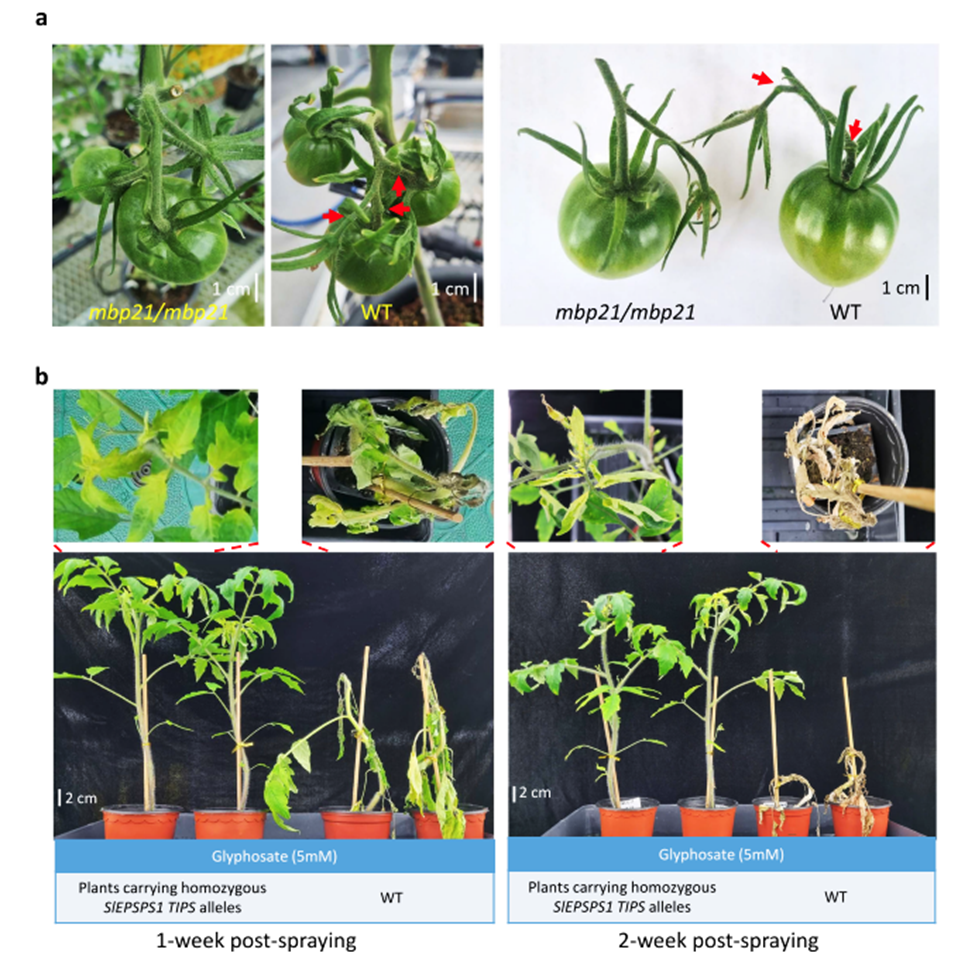
Prime editing (PE) enables precise genome modifications without donor DNA or double-strand breaks, but its application in dicot plants has faced challenges due to low efficiency, locus dependence, and poor heritability. Here, we develop an ultra-efficient prime editing (UtPE) system for dicots by integrating evolved PE6 variants (PE6c and PE6ec), an altered pegRNA (aepegRNA), an RNA chaperone, and a geminiviral replicon. UtPE significantly improves editing performance in tomatoes, with UtPEv1 excelling in simple edits (unstructured RTTs) and UtPEv3 effective for complex targets (structured RTTs or multiple nucleotide changes). Compared to a PE2max-based tool, UtPE increases desired editing efficiency by 3.39 to 8.89-fold, enables editing at previous inaccessible sites, achieves an average of 16.0% desired editing efficiency in calli, and produces high-frequency desired edits in up to 87.5% of T0 plants. Multiplexed editing at up to three loci and stable T1 inheritance are also achieved, resulting in traits such as jointless pedicels and glyphosate resistance, while minimizing off-target effects.
See https://www.nature.com/articles/s41467-025-67874-3

Views: 399